

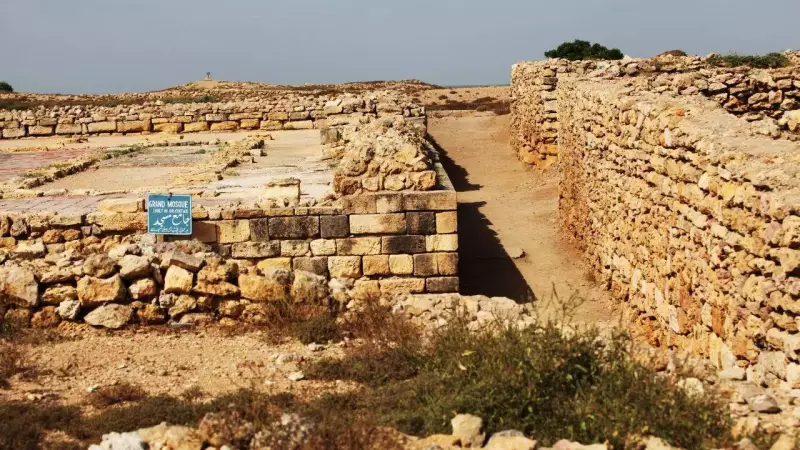
For decades, the mysterious fall of the advanced Indus Valley Civilization has puzzled historians and archaeologists. A groundbreaking new climate study now provides compelling evidence, placing long-term environmental change at the heart of this ancient society's transformation. The research shifts the narrative from a sudden catastrophe to a story of ecological vulnerability and gradual adaptation.
Decoding the Drought: Four Prolonged Dry Spells Reshaped a Civilization
A recent paper published in Nature Communications Earth & Environment presents a decisive conclusion. It states that successive, prolonged droughts were the primary force behind reshaping the Indus Valley Civilization. Researchers combined advanced climate simulations with paleoclimate data from lake-bed sediments, stalactites, and stalagmites to map hydroclimatic shifts across the region between 5,000 and 3,000 years ago.
The models reveal a startling pattern. Between approximately 4,450 and 3,400 years before present, the civilization's heartland endured four major drought episodes. Each of these dry periods lasted more than 85 years. These droughts progressively reduced vital monsoon rainfall, decreased river discharge, and dried up numerous tributaries and flood-fed wetlands.

Over generations, these relentless climatic stressors eroded the reliable water supply that was the foundation of Harappan life. The sophisticated agriculture, meticulous urban planning, and daily sustenance of millions began to falter. This environmental pressure gradually forced populations to leave their grand urban centres and disperse towards locations with more viable water sources.
From Flourishing Floodplains to Arid Landscapes
The Indus Valley Civilization, also known as the Harappan Civilization, thrived for centuries on a complex network of rivers fed by Himalayan snowmelt and the summer monsoon. These seasonal floods sustained farmland and cities across a vast territory, from modern-day Punjab to Sindh and beyond.
The new hydroclimate reconstructions show that this life-giving system began to fail. A steady weakening of monsoon patterns led to gradually decreasing precipitation over centuries, with a particularly severe drop around 4,000 years ago. This drying trend transformed once-predictable, fertile floodplains into uncertain and arid landscapes.
Without regular river inundation, the civilization's advanced irrigation and water management frameworks started to collapse. It became increasingly difficult to support dense urban populations, high-density housing, and large-scale agriculture. Ingenious water-management strategies could only partially offset the harsh new climate reality, pushing water-dependent communities to seek new homes.
The Great Migration: Cities Abandoned, Societies Transformed
As water supplies shrank and farm yields declined, a great migration began. People gradually abandoned magnificent urban centres like Harappa and Mohenjo-Daro. Archaeological evidence indicates that after about 3,900 years before present, settlement patterns shifted east and northeast towards areas with better rainfall or more reliable streams.
This process was not a violent, abrupt collapse but a gradual metamorphosis and adaptive response. As communities dispersed, the hallmarks of Indus urban genius—large drainage networks, standardized brick houses, and centralized planning—faded away. Long-distance trade networks and urban governance weakened. Society reorganized into smaller, village-scale settlements focused on subsistence, fundamentally redefining the region's social and economic fabric.
This study strengthens the argument that ecological factors, rather than invasions or social turmoil, were central to the civilization's decline. It highlights that for river-dependent societies, gradual environmental change can be as transformative as a sudden catastrophe.
Ancient Lessons for a Modern Climate Crisis
The story of the Indus Valley holds profound lessons for today's world, especially for monsoon-dependent regions like India. It illustrates how climate variability can reshape human settlement, agriculture, and social organization over long periods.

In an era where climate change is altering rainfall patterns and river flows, the Harappan experience underscores the critical value of:
- Adaptability in settlement and agricultural practices.
- Decentralised strategies and diversified water sources.
- Building resilience against long-term environmental stress.
The research provides a long-term perspective on the vulnerabilities of water-dependent civilizations. It serves as a powerful reminder that even the most advanced urban systems can falter when their foundational natural systems change, urging modern societies to learn from the past as they plan for a sustainable future.





