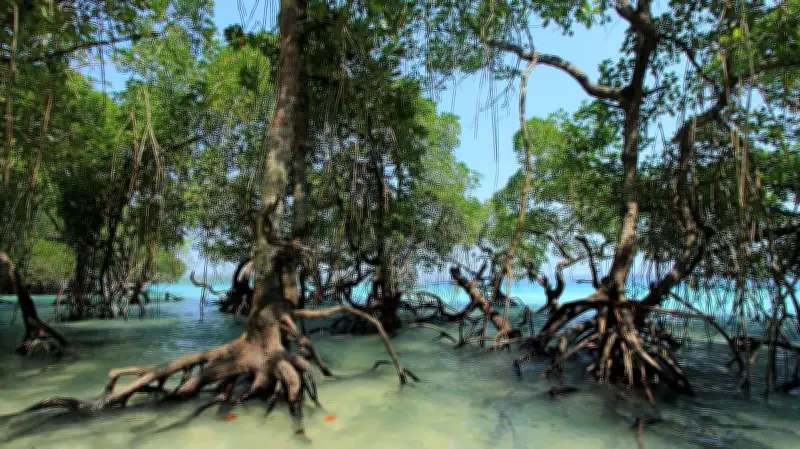
India's climate action strategy must prioritise its coastline, where rising risks expose a fragmented approach to ocean governance. Experts argue that blue carbon ecosystems—such as mangroves, seagrasses, and salt marshes—offer a powerful natural solution to climate change, yet remain underutilised in policy frameworks.
The Urgency of Coastal Climate Action
Coastal communities are already facing the brunt of climate change through sea-level rise, intensified cyclones, and erosion. However, India's current governance of ocean resources is split across multiple ministries and agencies, leading to inefficiencies and missed opportunities. A unified policy focusing on blue carbon could simultaneously mitigate emissions, protect biodiversity, and support livelihoods.
What Are Blue Carbon Ecosystems?
Blue carbon refers to carbon captured by the world's oceanic and coastal ecosystems. Mangroves, tidal marshes, and seagrasses can sequester carbon dioxide at rates up to four times higher than terrestrial forests. They also provide critical buffers against storms and habitat for fisheries. Despite these benefits, India has lost nearly 40% of its mangroves in the past century due to development and aquaculture.

Current Policy Gaps
India's ocean governance is divided among the Ministry of Environment, Forest and Climate Change, the Ministry of Earth Sciences, and state coastal zone management authorities. This fragmentation leads to conflicting priorities and slow implementation. For instance, mangrove conservation often clashes with infrastructure projects. A dedicated blue carbon policy could streamline efforts and attract international climate finance.
Recommendations for Policymakers
- Integrate blue carbon into national climate commitments: Update India's Nationally Determined Contributions (NDCs) to include specific targets for mangrove restoration and seagrass protection.
- Establish a coastal climate authority: Create a single body to coordinate conservation, restoration, and sustainable use of coastal ecosystems.
- Invest in scientific research: Map and monitor blue carbon stocks to quantify their climate benefits and guide management.
- Empower local communities: Involve coastal residents in restoration projects, providing alternative livelihoods to reduce pressure on ecosystems.
Economic and Social Co-Benefits
Protecting blue carbon ecosystems is not just about carbon storage. Healthy mangroves and seagrasses support fisheries that millions depend on for food and income. They also reduce disaster risk, saving billions in potential damages. By investing in these natural assets, India can achieve multiple Sustainable Development Goals simultaneously.
Global Examples to Follow
Countries like Indonesia and Mexico have pioneered blue carbon projects that generate carbon credits while benefiting local communities. India can learn from these models, adapting them to its diverse coastline. The upcoming UN Ocean Conference presents an opportunity for India to showcase leadership in ocean-based climate action.
As the world accelerates efforts to limit global warming, India's coastline cannot be an afterthought. Blue carbon ecosystems offer a ready-made, cost-effective tool for climate mitigation and adaptation. It is time for policy to catch up with science and prioritise the coast.