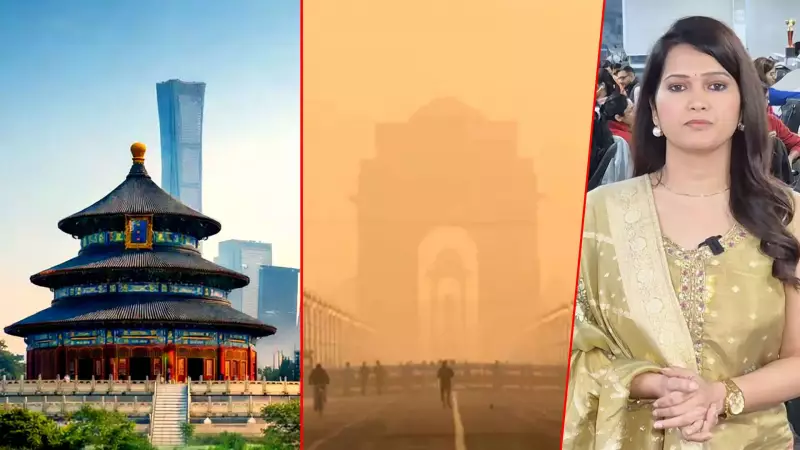
While Delhi residents once again endured a blanket of hazardous smog, a stark contrast emerged from the East. China has publicly detailed a comprehensive, step-by-step account of how its capital, Beijing, successfully tackled a similar air pollution nightmare over the past decade. The shared history of toxic air now tells two diverging stories: one of sustained policy triumph and another of recurring seasonal struggle.
From Shared Nightmare to Divergent Paths
Not long ago, Beijing and Delhi were synonymous with unbreathable air and health advisories. Today, the narrative has split. On December 17, 2025, as Delhi's Air Quality Index (AQI) soared to dangerous levels, insights from China's transformation offered a clear mirror to India's ongoing challenges. The core difference lies in the approach: Beijing committed to a long-term, systemic overhaul, while Delhi has often relied on reactive, temporary measures like odd-even schemes and construction halts.
The Beijing Blueprint: What Actually Worked?
China's playbook for clean air was neither quick nor simple. It was built on a foundation of aggressive, enforceable policy shifts sustained over years. The transformation hinged on several interconnected pillars.

First, the implementation of ultra-strict emission standards for industry and vehicles left no room for ambiguity. Factories were forced to upgrade technology or face shutdowns. Second, a massive expansion of the metro network provided a reliable, clean alternative to private vehicles, directly targeting one of the largest pollution sources.
Concurrently, a powerful push for electric mobility was enacted, with substantial subsidies for electric vehicles and a sprawling network of charging infrastructure. Perhaps most crucially, industrial restructuring moved heavily polluting industries away from the capital region. Finally, regional coordination ensured that efforts in Beijing were not undermined by pollution drifting from neighboring provinces, enforcing a unified battle plan across a vast area.
Delhi's Struggle: The Gap Between Intention and Action
Delhi's efforts, while visible, have not matched the scale or persistence of Beijing's campaign. Initiatives often emerge during peak pollution crises only to lose momentum when air quality marginally improves. The debate frequently shifts to political accountability and blame among neighboring states, slowing down coordinated regional action—a component central to China's success.
The reliance on short-term fixes, such as water sprinkling and smog towers, addresses symptoms rather than the root causes: industrial emissions, vehicular exhaust, construction dust, and agricultural stubble burning from surrounding regions. Experts argue that without a similar, decade-long commitment to policy enforcement and infrastructure change, Delhi's clean air goals may remain elusive.
The Road Ahead: Lessons in Political Will
The comparison between the two capitals is more than a technical case study; it is a lesson in governance and political will. Beijing's journey shows that reversing severe pollution is possible but requires unpopular, costly, and unwavering decisions that transcend electoral cycles. For Delhi and India's National Capital Region, the Chinese playbook underscores the need to move beyond crisis management. It highlights the imperative for a legally binding, regionally cooperative, and long-term framework that prioritizes clean air as a non-negotiable foundation for public health and economic stability.
The shared experience of smog has yielded two different models. One offers a proven, if difficult, path forward. The question now is whether Delhi can translate this blueprint into a locally effective, sustained action plan for its own future.