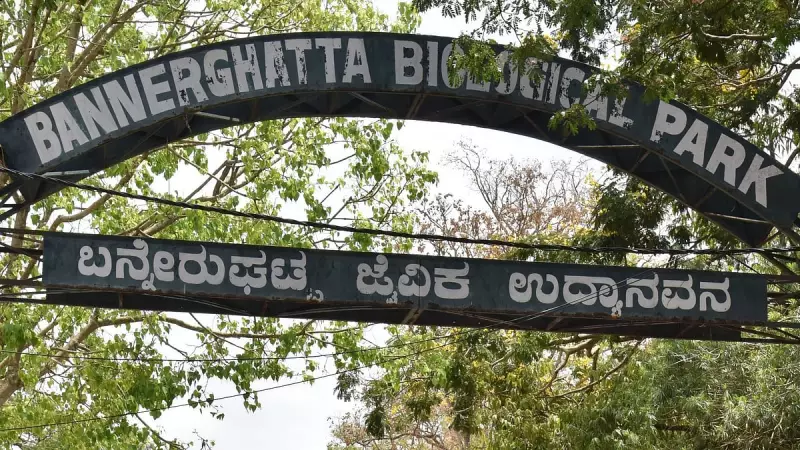
The future of a critical green buffer for Bengaluru now rests on a report being prepared by a central environmental authority. The Central Empowered Committee (CEC), appointed by the Supreme Court, is set to submit its final findings on the contentious reduction of the Eco-Sensitive Zone (ESZ) around Bannerghatta National Park by July 31, 2024.
Court Directs Final Submission on ESZ Controversy
This development follows a recent directive from the Karnataka High Court. The court was hearing a public interest litigation (PIL) that challenged the Karnataka government's decision to shrink the protected area. The CEC, which had previously submitted a preliminary report, informed the court that its comprehensive final report is nearing completion and will be filed before the month's end.
The core of the dispute dates back to June 2022. The state government, through a draft notification, proposed reducing the ESZ from the original 268.96 sq km to a mere 100 sq km. This draft was forwarded to the Union Ministry of Environment, Forest and Climate Change (MoEF&CC). Environmentalists and citizens' groups have vehemently opposed this move, arguing it would open the floodgates for unchecked commercial and industrial development, severely threatening the park's fragile ecosystem.

What is at Stake for Bannerghatta?
Bannerghatta National Park is not just a wildlife refuge; it is a vital ecological lung for the congested city of Bengaluru. The Eco-Sensitive Zone acts as a regulated buffer, preventing harmful activities immediately adjacent to the park boundary. A drastic reduction from nearly 269 sq km to 100 sq km would strip away a significant layer of protection.
The implications are severe. Experts warn that such dilution could lead to:
- Increased human-wildlife conflict as development creeps closer to animal habitats.
- Unregulated mining and quarrying activities in the now-unprotected areas.
- Pollution of water sources that feed the park and surrounding regions.
- Loss of crucial wildlife corridors used by elephants and other species.
The CEC's role is pivotal. As a Supreme Court-mandated body, its objective assessment will carry significant weight. The committee is expected to evaluate the ecological necessity of the ESZ, the rationale behind the proposed reduction, and its long-term environmental impact. Their final report will likely form the basis for the Supreme Court's ultimate decision on the matter.
A Timeline of Legal and Environmental Scrutiny
The legal journey of this case highlights its national importance. The Supreme Court took suo motu cognizance of the issue, later entrusting it to the CEC for detailed examination. The Karnataka High Court is concurrently hearing the PIL, awaiting the CEC's findings to proceed.
The state government has defended its decision, citing the needs of local communities and regional development. However, conservationists argue that the "principle of proportionality" must apply, where development is balanced against irreversible ecological damage. They contend that protecting Bannerghatta is essential for Bengaluru's water security, air quality, and climate resilience.
As the July 31 deadline approaches, all stakeholders—environmental groups, concerned citizens, and government authorities—are awaiting the CEC's conclusive report. This document will either validate the fears of ecological degradation or potentially chart a new course for the park's conservation. The outcome will set a major precedent for how India balances urban expansion with the imperative of protecting its remaining natural heritage.