The humble trail camera, once a tool for hunters, has undergone a remarkable transformation. Today, it stands as a silent guardian in the wild, fundamentally changing how humans observe, understand, and protect biodiversity. This shift from an instrument of pursuit to a tool of preservation is a significant chapter in modern conservation science.
The Evolution of a Conservation Tool
Originally developed for hunters to track game, the technology of remote, motion-activated cameras has been repurposed with profound effect. Conservationists and researchers now deploy these devices across diverse habitats, from the dense forests of Tadoba to the woodlands of Mysuru. The core function remains—capturing images triggered by movement—but the intent has flipped. Instead of aiding in capture, the cameras now facilitate protection and study, offering a non-intrusive window into the secret lives of animals.
This paradigm shift allows for continuous monitoring without human presence, which can disturb wildlife. The data gathered is invaluable, providing evidence of species presence, population estimates, and behavioural patterns. As highlighted by writer Pavan Kumar H, this technological adoption marks a critical advancement in ecological stewardship. The last update on this insightful perspective was recorded on 31 December 2025, at 19:29 IST.

A Gallery from the Forest Floor
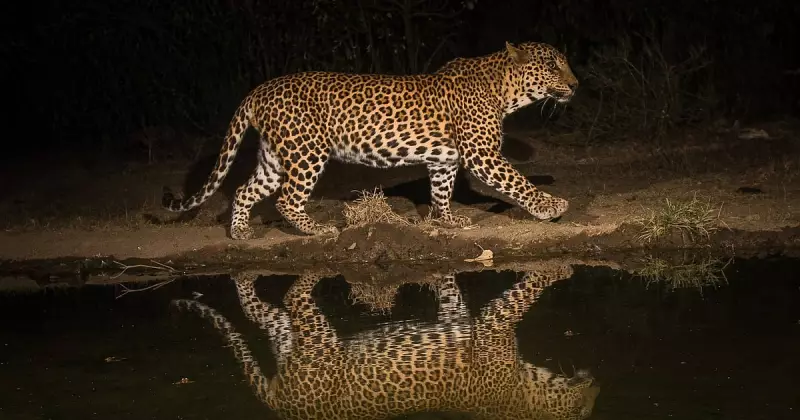
The proof of this technology's impact is vividly captured in the images it yields. Photographer Pruthvi B has demonstrated this through a series of compelling snapshots from Karnataka. His portfolio includes a serene group of spotted deer in Mysuru district, the elusive and nocturnal Palm civet cats, and the majestic power of a tiger in Tadoba. Each frame tells a story of life undisturbed.
Perhaps most telling is the image of Pruthvi B himself setting up a camera trap. It symbolises the new human role: a careful planner placing a passive observer, then retreating to let nature take its course. These cameras work tirelessly through day and night, in rain and shine, compiling a visual census that forms the backbone of contemporary wildlife research and anti-poaching efforts.
The Science and Strategy Behind the Lens
Deploying camera traps is both an art and a science. Strategic placement is crucial. Researchers must identify animal trails, watering holes, and territorial markings to maximise encounters. The cameras are equipped with infrared sensors and silent shutters to avoid detection. The collected data, often comprising thousands of images, is then analysed using sophisticated software, sometimes aided by artificial intelligence, to identify individual animals and track their movements.
In Indian contexts, such as the forests of Karnataka, this technology has been instrumental in monitoring tiger populations, understanding elephant corridors, and documenting the presence of rare and endangered species. It provides hard, irrefutable data that informs policy, guides forest management, and helps secure critical habitats. The move from anecdotal evidence to photographic proof strengthens conservation arguments and galvanises public support.
The journey of the camera trap is a powerful metaphor for conservation itself—adapting tools, changing perspectives, and using innovation for coexistence. As these silent sentinels continue to snap shutters in the depths of India's wilderness, they don't just take pictures; they capture a future where technology and tradition work hand-in-hand to safeguard the natural world.