

Cambodia's Limestone Caves: Uncharted Biodiversity Hotspots
Beneath the rugged hills of Cambodia's striking limestone landscape lies a hidden world that has remained largely unexplored for millennia. These ancient caves, formed over thousands of years through geological processes, represent not only marvels of natural history but also vibrant ecosystems teeming with life that has rarely, if ever, been witnessed by human eyes.
Recent Surveys Uncover Unknown Species
Recent comprehensive biodiversity surveys conducted in the region have revealed that these caves harbor numerous species previously unknown to science. From remarkable gliding snakes to microscopic snails, these discoveries underscore just how little humanity understands about life thriving in extreme and isolated environments.
What makes Cambodia's caves particularly fascinating is their extreme inaccessibility, which has allowed species to evolve in uniquely specialized ways. This isolation has created what scientists term "evolutionary islands" where flora and fauna develop distinct characteristics over extended periods.

The Flying Snake Discovery and Other Remarkable Finds
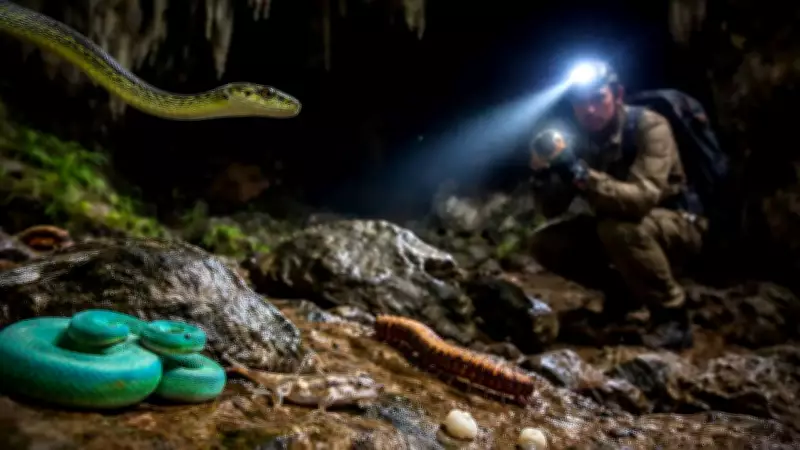
One of the most extraordinary discoveries involves a species of flying snake capable of gliding between surfaces using a distinctive flattening and waving motion. This adaptation allows the snake to move efficiently without ever touching the ground, representing a fascinating evolutionary solution to cave navigation.
In addition to this aerial serpent, researchers have documented several other remarkable species including:
- A strikingly bright turquoise pit viper
- Multiple previously unknown gecko species
- Various specialized snail varieties
- Several unique millipede species
These findings demonstrate that even in environments where scientists might expect familiar species, hidden caves can yield completely unexpected biological treasures.
Microscopic Species: The Unsung Heroes of Cave Ecosystems
While larger creatures naturally capture more attention, some of the most significant discoveries have been microscopic in scale. These tiny organisms play crucial roles in maintaining cave ecosystem sustainability through their decomposition activities.
In resource-limited cave environments where organic materials, bat guano, and decaying matter represent primary nutrient sources, microscopic species like specialized snails and millipedes serve as essential decomposers. They break down organic materials, recycling nutrients throughout the entire food chain and supporting larger cave inhabitants.
Furthermore, these microscopic species often serve as sensitive environmental indicators. Even minor changes in cave conditions can threaten their survival, making them valuable barometers for ecosystem health.
Research Methodology and International Collaboration
The discoveries resulted from years of dedicated exploration by conservation scientists who investigated over 60 caves across Cambodia's Battambang Province. Researchers typically conducted their work at night when many cave species demonstrate peak activity levels.
Scientific teams navigated challenging terrain including narrow passages and steep rocky areas while equipped with specialized headlamps and exploration gear. This research represents a collaborative effort between the international conservation organization Fauna & Flora and Cambodia's Ministry of Environment, highlighting the importance of cross-border cooperation in biodiversity studies.
Scientific Significance and Conservation Implications
These discoveries hold substantial scientific importance by expanding our understanding of species evolution in isolated environments. The research enables identification of potentially endangered species before they're even formally documented, addressing what one researcher described as the fundamental conservation challenge: "We cannot protect biodiversity if we don't know what we're protecting."
Threats Facing Cambodia's Cave Ecosystems
Despite their ecological importance, Cambodia's cave ecosystems face significant threats that could jeopardize their unique biodiversity. Primary concerns include:

- Limestone quarry excavation for cement production
- Habitat destruction from human encroachment
- Potential contamination from nearby development
Because many cave species exist only in specific locations (endemic species), the destruction of even a single cave could result in multiple extinctions, representing irreversible losses to global biodiversity.
The Vital Importance of Conservation Efforts
Conserving these cave ecosystems proves essential not only for preserving biodiversity but also for maintaining broader ecological balance. These environments harbor unique species that have evolved over millions of years and exist nowhere else on Earth.
Conservation initiatives led by organizations like Fauna & Flora in partnership with governmental agencies ensure that species are properly documented and protected before potential extinction. Continued research and public awareness about cave ecosystem importance remain crucial for preserving these natural treasures for future generations.





