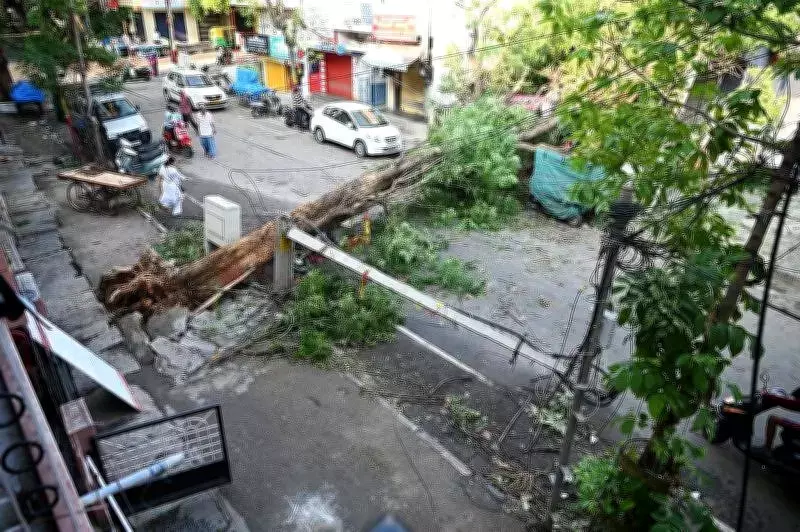
Bengaluru experienced its wettest April day in recorded climatological history on Wednesday evening, as squally thundershowers accompanied by hailstorms dumped over 11 centimeters of rain across central parts of the city in just over an hour, according to the India Meteorological Department (IMD).
Volume of Rainfall: A Missed Opportunity
Meteorologists, hydrologists, and water conservation activists have analyzed the sheer volume of this rainfall, revealing a striking story of both abundance and missed opportunity for a city that has invested heavily in fetching water from sources up to 300-400 kilometers away.
Sources in the Greater Bengaluru Authority (GBA) indicated that the record rain primarily lashed the Bengaluru Central City Corporation areas, which span over 200 square kilometers. Based on preliminary damage assessments by GBA officials, hydrologists estimate that Bengaluru may have received between 20 and 22 million cubic meters of water. This translates to approximately 0.75 tmcft (thousand million cubic feet), enough to fill over 30,000 standard 25-meter swimming pools with a depth of 5 to 6 feet.

"Bengaluru, situated on a geographical ridge at an elevation of 900 meters, receives between 95 and 110 centimeters of rainfall annually. According to IMD data, this single day's rainfall accounted for nearly 10 percent of the city's annual precipitation. This amount would have been sufficient to meet Bengaluru's water requirements for a fortnight," explained a hydrologist.
Wasted Water and Urban Infrastructure
A senior IMD official lamented that the rainwater was largely wasted as it ran off into drains. "With paved and cemented surfaces dominating central Bengaluru, very little water has percolated down to recharge the water table. The rain may have brought sorrow and suffering, but it was also a golden opportunity to collect a huge volume of water," a meteorologist explained.
The city's lakes and water bodies, which could have stored a significant portion of this rainfall, have suffered from encroachment and sedimentation. A lake activist working with the GBA on restoration projects noted, "The storage capacity of major lakes in and around Bengaluru has declined from 5 tmcft in 1970 to a mere 1.5 tmcft in 2025. Going by the volume of rainfall recorded, these thunderstorms could have filled up two-thirds of the storage capacity of the surviving lakes."
The record rainfall highlights the urgent need for better water management and conservation strategies in Bengaluru, as the city continues to grapple with water scarcity despite receiving substantial precipitation.