Bengal's Coastal Crisis: Fishermen Battle Empty Nets and Policy Neglect
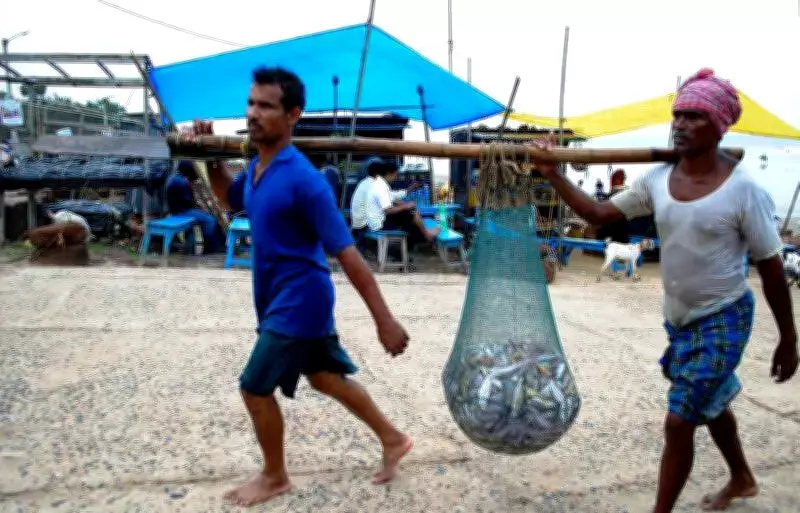
In the fishing villages of East Midnapore, from Digha to Tajpur, the age-old rhythm of life is faltering. For fishermen like Subhankar Majhi, the intense political debates over fish are distant echoes compared to the harsh reality of empty nets. His days, steeped in brine and salty air, now end with dwindling catches, forcing a grim reassessment of livelihood.
A Legacy Under Threat
For 26 years, Majhi's world has been defined by tides and harvests. The adage "Maachhe-Bhaate Bangali" rings painfully true as daily catches in the Bay of Bengal shrink dramatically. "It's so low now that some have turned to agriculture or migrated to fishing harbours in Kerala," Majhi, a resident of Olichak, explains. "Yet, thousands like me persist, hoping Bengali's appetite for fish endures."
Nearby, in Dakshin Purusottampur, Palash Nandi stands among beached boats, his voice a mix of pride and anxiety. Here, 112 families share a heritage of fishing knowledge passed through generations. "Every family inherits this work—it's all we know," Nandi says. "But without a healthy ecosystem and better facilities, our children may not follow."

Ecological Shifts and Economic Strain
From Baguran Jalpai to Shankarpur, fishing has shaped coastal life for centuries. However, this continuity is now strained. Cyclone Yaas in 2021 altered the region's geography, creating new silt islands or 'chars' near traditional grounds. Less visible changes include warmer waters and disrupted currents, pushing fish, especially spawning ones, into deeper waters beyond the reach of small-scale fishermen.
At the Jalda Matsya Khoti landing centre near Tajpur, Palash Bar highlights a growing imbalance. Traditional boats, operating within three to five nautical miles with fixed nets, are outcompeted by metal-hulled trawlers that sweep the seabed. Bar's earnings have plummeted from Rs 5,000-7,000 per trip to a meagre Rs 2,000-3,000.
The Hollowing Out of the 'Goldilocks Zone'
Pradip Kumar Chatterjee of the National Federation of Small Scale Fish Workers points to a crisis in the 'Goldilocks Zone'—shallow, nearshore waters up to 100 metres deep, typically rich in marine life. "This productive zone is being hollowed out," he warns, citing an estimated 15,000 trawlers along the coast.
Policy Neglect and Uneven Support
Adding to ecological and economic stress is a sense of policy neglect. Unlike other Indian states, Bengal's annual fishing ban during spawning season applies uniformly, affecting traditional fishers disproportionately. "Unpredictable weather, with storms even in March, hampers recovery before the April ban," Nandi notes.
While schemes like Lakshmir Bhandar provide some financial cushion, targeted support remains uneven. Fishermen in East Midnapore report inconsistent distribution of the Rs 5,000 relief during bans, especially compared to neighbouring South 24 Parganas. "All we want is a dignified life and a boat full of fish," Majhi concludes, echoing a community's plea for survival.