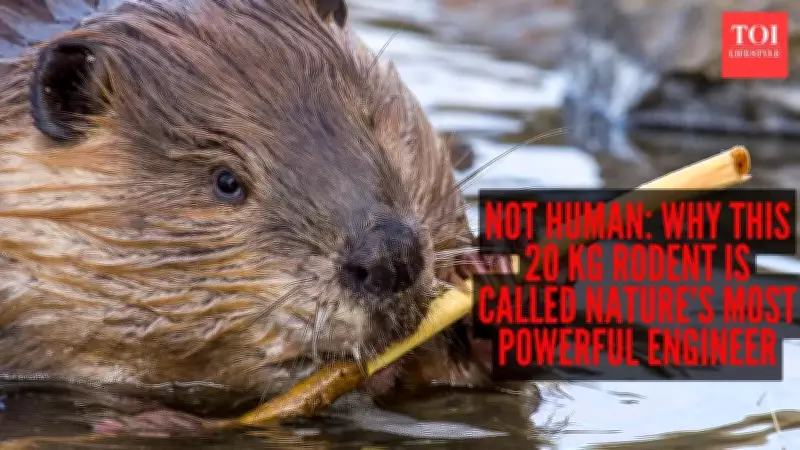
The Beaver: Nature's Master Engineer Outperforming Human Innovation
When considering the world's most influential engineers, one might immediately think of tech titans developing reusable rockets or advanced artificial intelligence neural networks. However, if we measure impact by the profound transformation of local landscapes, the undisputed heavyweight champion is not a human at all. It is a 20-kilogram rodent with distinctive orange teeth and a tail resembling a soggy cricket bat.
The Original Civil Engineer
The North American beaver does not merely inhabit an ecosystem; it constructs one entirely from scratch. While most animals spend their lives adapting to their surroundings, beavers stand alone—besides humans—as creatures that observe a river and decide to execute a complete structural overhaul. Their work begins with a simple sound: the trickle of running water. To a beaver, this sound represents a design flaw that must be corrected, deploying a level of hydraulic engineering that would impress any city planner.
Beavers do not simply "build dams"; they undertake sophisticated multi-stage construction projects:

- The Foundation: They anchor heavy stones and thick branches into the stream bed to secure the structure against powerful currents.
- The Infill: Using a mixture of mud, reeds, and smaller sticks, they create a completely watertight seal.
- The Maintenance: They exhibit obsessive leak detection, utilizing their sensitive paws to locate and repair breaches within minutes of occurrence.
Why the "Beaver Effect" Is Gaining Global Attention
Why do beavers invest such tremendous effort? It extends far beyond creating a cozy home. By halting water flow, beavers generate expansive wetlands, which function as "nature's kidneys." The environmental impact is monumental and multifaceted:
- Flood Control: Beaver dams serve as natural speed bumps for storm surges, decelerating water movement and preventing downstream erosion.
- Water Purification: The resulting ponds act as efficient natural filters, trapping harmful toxins and sediment before water progresses downstream.
- Drought Insurance: By forcing water into the ground, beavers maintain stream flow even during prolonged dry summer periods.
- Wildfire Buffers: In drought-affected regions, landscapes altered by beavers frequently remain as the only green, surviving patches after devastating forest fires.
Not Just a Lodge, But an Impregnable Fortress
The beaver's lodge represents a masterclass in defensive architecture. It is essentially an island constructed from sticks and mud, featuring underwater entrances that render it inaccessible to predators like wolves or cougars without specialized diving equipment. The interior showcases remarkable climate control capabilities; the thick mud walls provide exceptional insulation, maintaining internal temperatures well above freezing even when the pond surface is completely frozen.
In an era where humanity urgently seeks "nature-based solutions" to combat climate change, the beaver offers a complimentary masterclass in environmental engineering. These creatures work without compensation, require no permits, and have been addressing water management crises since the Stone Age.
The next time you encounter a clogged stream or a collection of gnawed logs, recognize not a nuisance, but a visionary engineer at work. This remarkable rodent demonstrates that sometimes, the most advanced solutions come not from human technology, but from nature's timeless wisdom.