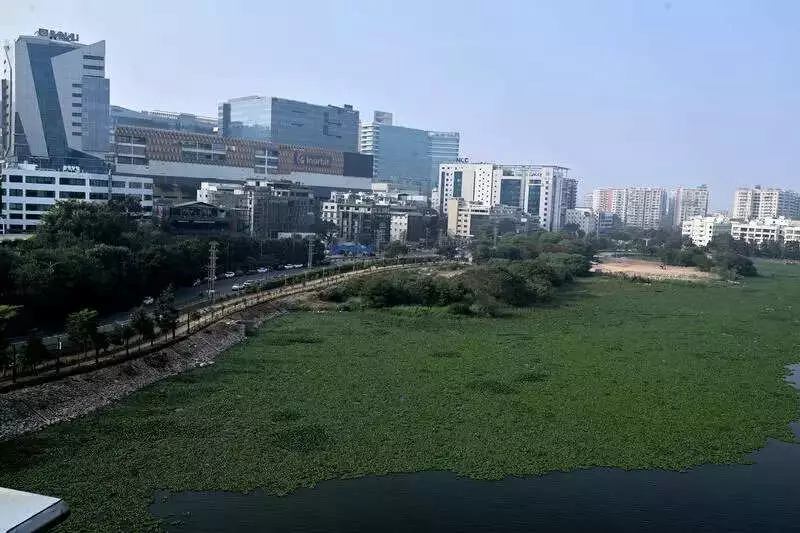
A damning report from the Telangana Pollution Control Board (TGPCB) has revealed an alarming ecological crisis in Hyderabad. Not a single one of the 185 lakes officially designated by the board meets the required water quality standards, painting a grim picture of the city's urban water bodies.
Alarming Levels of Pollution and Oxygen Depletion
The latest data highlights critical failures across key parameters. Scientists measure the health of aquatic life primarily through Dissolved Oxygen (DO) levels, which indicate the amount of oxygen available in water. The Ministry of Environment, Forest and Climate Change recommends a minimum of 5 mg/l for a healthy lake. However, the TGPCB found shockingly low levels, with some lakes recording DO as low as 0.3 mg/l, indicating water bodies that are nearly dead and incapable of supporting life.
Prominent lakes like Mir Alam Tank, Kotha Cheruvu in Alwal, Pedda Cheruvu in Khajaguda, and Banjara Lake were among those with critically low oxygen. Even the iconic Hussain Sagar and the popular Durgam Cheruvu were found to have dangerously low levels at 1.1 mg/l and 2.7 mg/l respectively.

High BOD and Toxic Heavy Metals Pose Severe Risks
Another critical indicator, Biochemical Oxygen Demand (BOD), which measures organic pollution from sewage and waste, was found to be excessively high. While the safe limit is 3 mg/l or less, most lakes breached this threshold, with some recording levels as high as 16 mg/l.
Perhaps more worrying for long-term public health is the confirmed presence of toxic heavy metals in the water. The analysis detected cadmium, iron, mercury, zinc, copper, lead, nickel, and chromium. These substances are dangerous even in small quantities and pose a severe threat to ecosystems and groundwater, as lakes often recharge the surrounding aquifers.
The situation is compounded by the fact that 23 of the 185 designated lakes have completely dried up, and data for several others could not be collected due to encroachment or inaccessibility.
Experts Blame Mismanagement and Encroachment
Environmentalists and activists point to systemic failures behind the persistent deterioration. Rampant encroachment, unchecked inflow of untreated sewage, and industrial effluent discharge are cited as primary culprits.
"There is a disproportionate emphasis on lake beautification, walkways, lighting and landscaping, while core issues of hydrology and ecology are ignored," said Subba Rao D, who has worked on Hyderabad's lake issues for over thirty years. He emphasized that mismanagement of both solid and liquid waste is the central problem, with little focus on genuine ecological restoration.
Madhulika Chaudhary of the Dhruvansh Foundation highlighted another critical flaw: polluted stormwater. "Until solid waste is managed properly, stormwater flowing into lakes will continue to carry pollutants," she stated. She also pointed out the lack of segregation between sewage and stormwater lines in many buildings, which increases the volume of untreated waste entering the lakes.
Chaudhary raised specific concerns about Sewage Treatment Plants (STPs) built within the Full Tank Level (FTL) zones of lakes. "When STPs are built in FTL areas, their year-round functioning becomes questionable. During monsoons, these systems often fail or overflow, worsening pollution," she explained.
In response to the crisis, both the Pollution Control Board and the Greater Hyderabad Municipal Corporation have stated that lake maintenance is a collective responsibility of multiple departments and does not fall under the jurisdiction of any single agency, indicating a complex governance challenge that needs urgent resolution to save the city's dying water bodies.