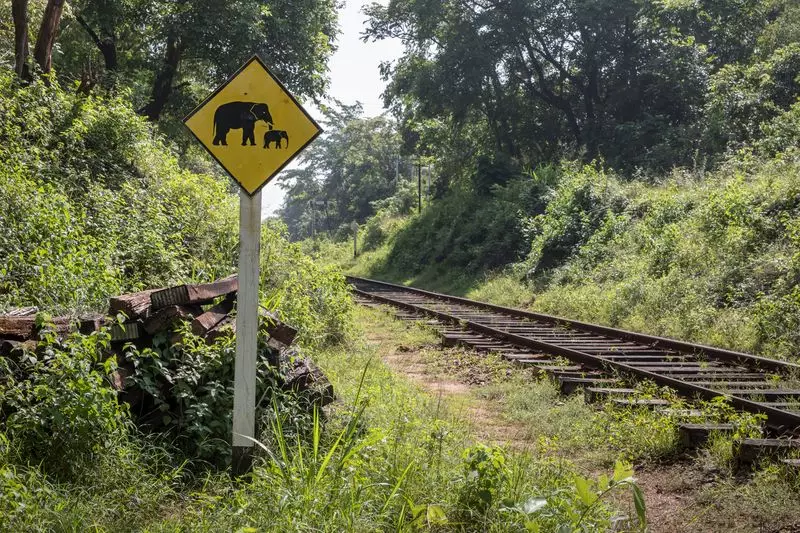
A devastating incident in Assam has resulted in the death of eight elephants after they were struck by a high-speed train. The tragic accident occurred late on a Sunday night, sending shockwaves through the local community and highlighting the ongoing conflict between railway infrastructure and wildlife.
Details of the Tragic Collision
The New Delhi-Sairang Rajdhani Express (Train No. 20503) hit the herd of elephants at approximately 11:30 PM on Sunday night. The location of the accident was between the Hawaipur and Panbari stations in the Lumding division of Assam. This area falls under the Northeast Frontier Railway (NFR) zone.
According to railway officials, the train was traveling from New Delhi towards Sairang, near the capital city of Aizawl in Mizoram. The impact was severe, leading to the immediate death of seven elephants at the scene. An eighth elephant, critically injured in the collision, succumbed to its wounds later.
Initial reports suggest that the herd was crossing the railway tracks when the high-speed train approached. The driver reportedly applied the emergency brakes upon sighting the animals, but the momentum and short distance made it impossible to avoid the collision.
Immediate Aftermath and Public Outcry
The aftermath of the accident saw a swift and emotional response from local residents. Angered by the recurring nature of such tragedies, people from nearby villages gathered at the site and blocked the railway tracks in protest. This action disrupted train services on the route for several hours as they demanded concrete steps to prevent future incidents.
Railway authorities and local administration officials rushed to the spot to manage the situation. They engaged with the protestors, assuring them that the matter would be investigated and necessary actions taken. The blockade was eventually lifted after discussions, allowing train movement to resume.
The Northeast Frontier Railway issued a statement expressing deep regret over the incident. Officials confirmed that the Divisional Railway Manager (DRM) of Lumding division visited the accident site to oversee the clearance operations and assess the circumstances.
Ongoing Challenges and Calls for Action
This tragic event is not an isolated one. Assam and other parts of Northeast India have witnessed several similar incidents where elephants and other wildlife have been killed by trains. These accidents often occur in corridors that are traditional elephant migration paths, now intersected by railway lines.
Conservationists and wildlife experts have repeatedly called for enhanced safety measures, including:
- Reducing train speeds in identified elephant corridors, especially during night hours when visibility is low.
- Improving early warning systems using sensors or forest department alerts to inform locomotive pilots about animal movements near tracks.
- Constructing underpasses or overpasses (animal corridors) to facilitate safe crossing for wildlife.
- Strengthening coordination between the Forest Department and Railways for real-time monitoring.
The death of eight elephants in a single strike represents a significant loss for the region's biodiversity. It underscores the urgent need to balance developmental infrastructure with critical wildlife conservation efforts. As investigations continue, the incident has reignited the debate on implementing sustainable and effective solutions to protect both human transit and India's majestic wildlife.