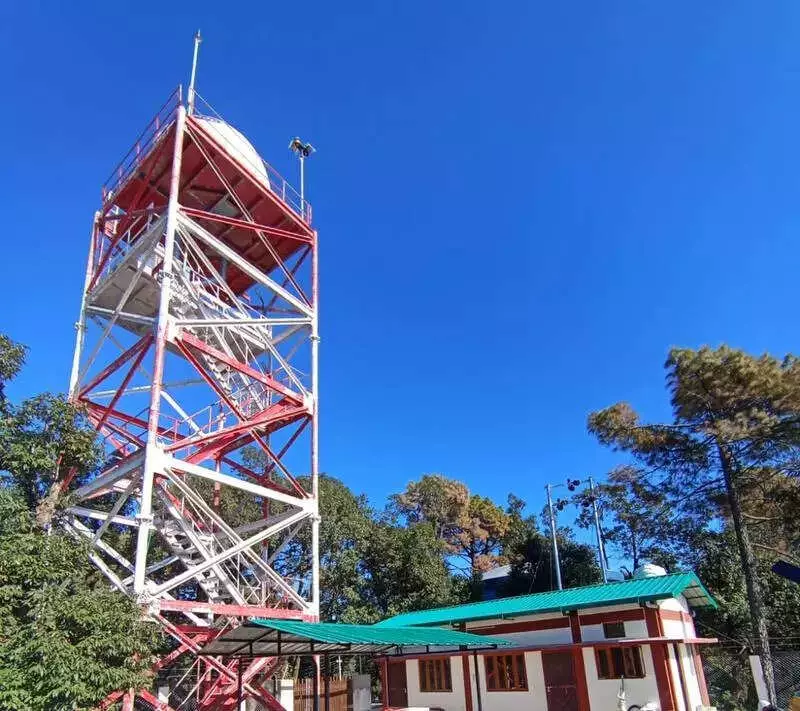
In a significant move to bolster disaster preparedness, Uttarakhand is set to receive a major upgrade to its early-warning infrastructure. The central government has sanctioned the installation of three new advanced Doppler Weather Radars (DWRs) for the state, marking a crucial step in enhancing weather monitoring capabilities.
Filling Critical Gaps in Hazard-Prone Regions
The new radars will be strategically installed in Haridwar, Pantnagar, and the high-altitude station of Auli. This expansion is designed to extend high-resolution, real-time weather surveillance across one of India's most vulnerable states to natural hazards. Currently, Uttarakhand relies on three existing radars located at Surkanda Devi, Mukteshwar, and Lansdowne.
This existing network leaves substantial areas, including the Shivalik foothills, sections of Kumaon, and the upper Garhwal ranges, without adequate real-time coverage. The forthcoming installations are specifically aimed at closing these dangerous monitoring gaps, ensuring more comprehensive tracking of fast-developing weather systems that often lead to cloudbursts, flash floods, and landslides.

How Doppler Radars Save Crucial Minutes
Doppler radars are indispensable tools in mountainous terrain. Unlike conventional radars, they provide vital data on storm structure, wind speed and direction, moisture concentration, and the vertical growth of clouds. This technology can detect signs of severe weather phenomena 30 to 90 minutes before they strike, offering invaluable lead time for authorities to issue alerts and for communities to take preventive action.
With the increasing frequency of extreme rainfall events over the past decade in Uttarakhand, the need for faster and more accurate alerts has never been greater. The new radars are expected to significantly strengthen the state's response mechanism to such sudden climatic threats.
Survey Complete, Awaiting Final Nod
The process for deploying these critical systems is already underway. C S Tomar, Director of the Regional Meteorological Centre, confirmed that the preliminary survey to identify suitable sites for the radars has been completed. A detailed report has been submitted to the headquarters for final approval, and physical installation will commence immediately upon receiving the green light.
This initiative is part of a broader expansion of Uttarakhand's weather-observation network. As highlighted by Jitendra Singh, Minister of State for the Ministry of Earth Sciences, at a recent conference in Dehradun, the state's infrastructure already includes 33 meteorological observatories, 142 automatic weather stations, 107 rain gauges, and various other monitoring systems at district and block levels. The addition of three Doppler radars represents a qualitative leap in this network's capability.
The integration of these new radars will provide meteorologists with a much clearer and timely picture of atmospheric disturbances over the Himalayas. For the residents of Uttarakhand, this translates to more reliable warnings, potentially saving lives and property in a state where the weather can turn treacherous with little notice.