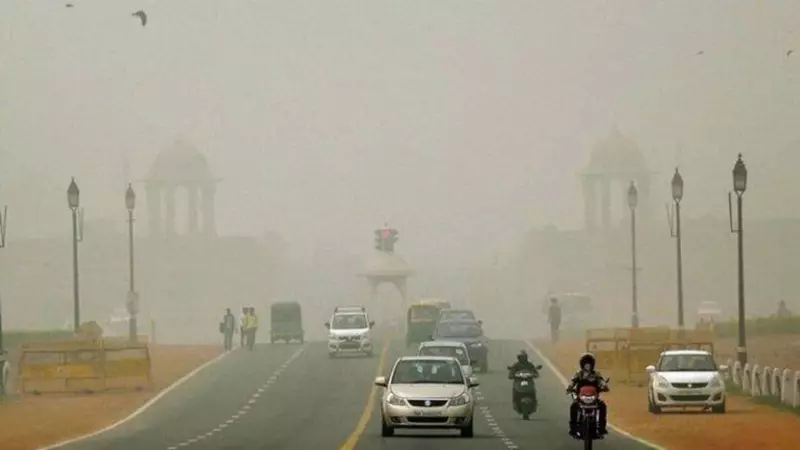
In a decisive move to combat the persistent air quality crisis, the Union Government has set a strict year-end deadline for polluting industries and state governments in the National Capital Region (NCR). Union Environment Minister Bhupender Yadav announced that states and civic bodies must submit their annual action plans for pollution control for the year 2026 by the end of December 2025.
Strict Deadline for Industries, Risk of Closure
Simultaneously, a major crackdown is imminent for 2,254 identified polluting industries across Delhi-NCR. The Central Pollution Control Board (CPCB) Chairman, Vir Vikram Yadav, revealed that these units, primarily from the metal, food & processing, and textile sectors, have been directed to install air pollution-cutting devices and Online Continuous Emission Monitoring Systems (OCEMS).
Failure to comply with these directives by December 31, 2025, will result in stringent action, including potential closure of the non-compliant industries. The OCEMS are critical as they feed real-time emission data directly to CPCB servers, enabling authorities to take immediate action against violations of permissible limits.

Expert Committee on Vehicular Pollution & Focus on Hotspots
The directives emerged from a high-level review meeting chaired by Minister Yadav on Wednesday, which included senior officials from Delhi, Haryana, Uttar Pradesh, Rajasthan, Punjab, and municipal commissioners of NCR cities. This was the sixth such review meeting this year.
Addressing another major pollution source, Yadav stated that the Commission for Air Quality Management (CAQM) has decided to form an expert committee on vehicular pollution. This committee will deliberate with all stakeholders to formulate effective strategies.
Further, CAQM Chairperson Rajesh Verma highlighted a short-term plan to tackle emissions from traffic congestion. Sixty-two congestion-prone traffic hotspots across the region have been identified for immediate intervention to reduce vehicular emissions.
Data Integrity and Gradual Improvements
Responding to allegations about the manipulation of air quality data, CPCB Chairman Yadav firmly denied any interference. He asserted that pollution monitoring stations generate data automatically based on scientific siting. "We cannot tamper with them," he emphasized.
Officials also pointed to some positive trends. Verma noted that between January and November 2025, Delhi witnessed only three days with a 'severe' Air Quality Index (AQI). The concentration of harmful particulate matter (PM 2.5 and PM 10) during this period was also reported to be lower compared to the previous three years.
The Centre's push follows a high-level task force meeting chaired by the Prime Minister's Principal Secretary, P K Mishra, in October, where industrial pollution, dust control, greening, and vehicular emissions were flagged as priority areas. The Environment Ministry is also reviewing stricter emission norms for key industrial sectors based on a report from IIT Kanpur.