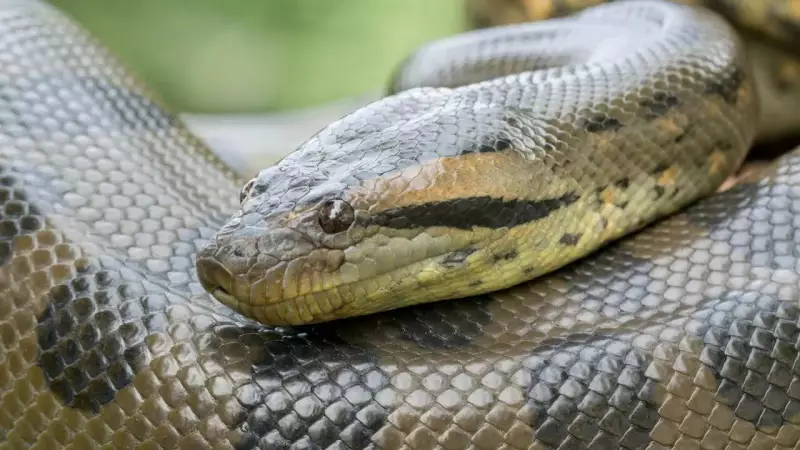
In a stunning revelation that rewrites our understanding of reptilian giants, scientists have confirmed the existence of a truly colossal Green Anaconda. This discovery, made in the heart of the Amazon, shatters previous records and highlights the enduring mysteries of one of the planet's most formidable apex predators.
Ana Julia: The Record-Setting Giant of the Amazon
A landmark research expedition by National Geographic in 2024 led to the verification of a northern Green Anaconda of unprecedented proportions. Named Ana Julia, this female snake measured a staggering 20.7 feet (about 6.3 meters) in length and weighed 441 pounds (200 kilograms). Found in the northern Amazon region of Ecuador, this individual surpasses earlier scientific estimates and stands as the largest snake ever scientifically documented by weight and girth.
This find was doubly significant as it introduced the world to the northern green anaconda (Eunectes akayima), a finding that challenges prior knowledge about the species' evolutionary history. While local Waorani communities have long spoken of even larger serpents hidden in the shadowy waterways of the Amazon and Orinoco basins, Ana Julia provides concrete, measurable proof of these giants.

Habitat and Hunting: The Life of an Aquatic Apex Predator
Green Anacondas are masters of South America's aquatic landscapes. They primarily inhabit the slow-moving rivers, swamps, marshes, and flooded grasslands east of the Andes Mountains, across countries like Brazil, Colombia, Venezuela, Ecuador, Peru, Bolivia, and Guyana.
Their hunting strategy is a masterclass in ambush predation. As non-venomous constrictors, they rely on immense power.
- They can remain submerged for up to ten minutes, with only their eyes and nostrils breaking the water's surface.
- They launch surprise attacks on prey like deer, capybaras, and even caimans.
- They kill by suffocation or causing cardiac arrest through constriction before swallowing their meal whole.
This method, combined with their sheer size, cements their status as apex predators. Interestingly, a population has also established itself in Florida's Everglades, where they are considered a problematic invasive species with few natural checks on their numbers.
Size, Reproduction, and Evolutionary Mastery
The dimensions of the Green Anaconda are nothing short of extraordinary. They are the heaviest reptiles on Earth, with females growing significantly larger than males—a phenomenon known as sexual dimorphism. A breeding female can be five times larger than her male counterpart.
Average adults measure 15-20 feet and weigh 200-300 pounds, though legends and some reports hint at lengths nearing 33 feet. Females give live birth to 20-40 offspring, each already about two feet long at birth.
Their gigantic size offers key evolutionary advantages:
- Larger females can produce bigger, more robust litters.
- Greater mass and strength allow them to tackle a wider range of prey.
- Eyes on top of their head provide perfect camouflage while scanning for prey.
This suite of traits has made them successful apex predators for millions of years.
Conservation: Protecting the Giants of the Waterways
Despite their power and fearsome reputation, anacondas face significant threats. Habitat destruction, hunting for their skin, and the illegal pet trade pose serious risks to their populations. Conservation efforts are critically focused on preserving their riverine and rainforest ecosystems. Maintaining the health of these habitats is essential, as anacondas play a crucial role as top predators in balancing the food web.
Public fascination with these magnificent creatures continues to drive scientific research, responsible wildlife tourism, and broader ecological awareness. Protecting the anaconda means safeguarding a vital part of South America's rich natural heritage for generations to come.