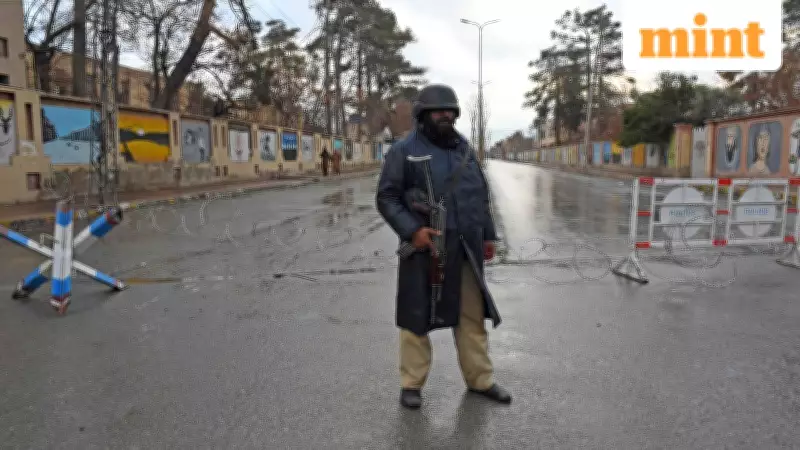
Pakistan's Balochistan Province Engulfed in Violence as Security Forces Eliminate 150 Militants
Pakistan is grappling with one of its most severe security crises in recent years as nearly 150 militants have been killed in less than two days across the troubled southwestern province of Balochistan. The intense military operation comes amid a coordinated wave of attacks by Baloch separatist groups, leading to widespread disruption including an internet blackout and transport paralysis.
Unprecedented Violence Claims Multiple Lives
According to Sarfraz Bugti, the chief minister of Balochistan, security forces have managed to eliminate 145 terrorists within a 40-hour period. The deadly confrontation has resulted in significant casualties on all sides, with 31 civilians and 17 security personnel also losing their lives during the violent clashes.
This escalation represents a dramatic increase in insurgent activity across Pakistan. Data from the South Asia Terrorism Portal reveals that deaths from insurgent attacks have surged to 3,967 nationwide over the past year, marking the highest toll since 2015. The mineral-rich province of Balochistan, which borders Afghanistan, has been particularly affected by this unrest.

Coordinated Attacks Target Civilian Infrastructure
The violence erupted over the weekend when attackers, disguised as ordinary civilians, infiltrated multiple public spaces including:
- Schools and educational institutions
- Hospitals and medical facilities
- Banks and financial centers
- Local markets and shopping areas
Pakistan's junior interior minister Talal Chaudhry confirmed that the attackers indiscriminately targeted ordinary people working in shops and public spaces, creating widespread panic across the region.
Baloch Liberation Army Claims Responsibility
The banned Baloch Liberation Army (BLA) has claimed responsibility for what it describes as a coordinated operation against security forces, code-named Herof or 'black storm'. According to officials, attacks were launched almost simultaneously across multiple districts including:
- Quetta, the provincial capital
- Gwadar, the strategic port city
- Matsung district
- Noshki district
Pakistan's defence minister Khawaja Asif revealed that at least two of the attacks involved female perpetrators, noting that BLA militants have increasingly been targeting civilians, laborers, and members of low-income communities.
Military Response and Conflicting Casualty Figures
While Pakistan's military reports 17 law enforcement officials killed over the weekend, the BLA has claimed significantly higher numbers, asserting that it killed 84 members of Pakistan's security forces and captured another 18. The militants employed various tactics including:
- Direct assaults on security installations
- Suicide bombing attempts
- Coordinated attacks across multiple locations
Chief Minister Bugti stated that security forces had intelligence reports about the planned operation, enabling them to initiate pre-emptive operations a day before the attacks began.
International Reactions and Diplomatic Tensions
The violence has sparked diplomatic tensions between Pakistan and India, with Pakistan claiming that the militants responsible were Indian-sponsored. India's Ministry of External Affairs spokesperson Randhir Jaiswal categorically rejected these allegations, stating that Pakistan should instead address the long-standing demands of its people in the region.
Meanwhile, the United States condemned the attacks through US Charge d'Affaires Natalie Baker, who described them as acts of terrorist violence and expressed solidarity with Pakistan.
Widespread Disruption Across Balochistan
As security forces continue sanitization operations across the province, significant disruptions have affected daily life in Balochistan:

- Mobile internet services have been completely suspended
- Road traffic remains severely disrupted
- Train services continue to face interruptions
- Public movement has been restricted in multiple areas
The situation remains fluid as Pakistani security forces maintain their operations against militant groups in the resource-rich province that has long witnessed demands for greater autonomy and a larger share of regional resources from Baloch nationalist groups.