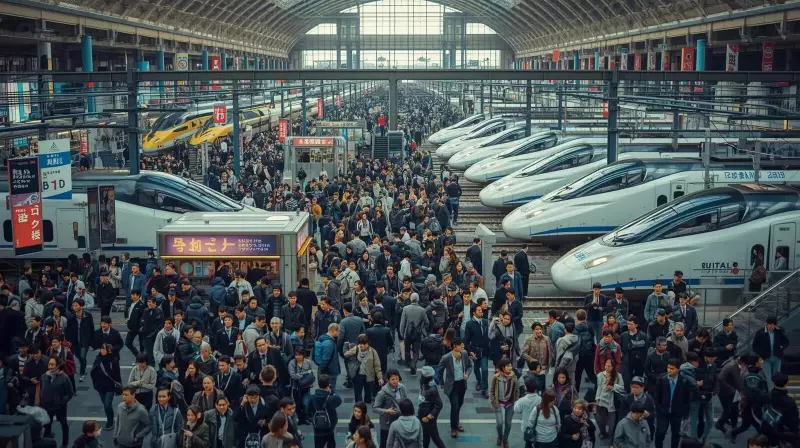
In the heart of the world's megacities, train stations have evolved far beyond simple transit points. They are now colossal engines of urban life, seamlessly blending transport, commerce, and social interaction. Every single day, these hubs are flooded by millions of commuters, students, shoppers, and tourists, serving as the primary gateway to work, education, and leisure. The busiest among them are marvels of logistics and urban planning, managing staggering passenger flows while doubling as shopping malls, business centers, and community spaces.
Global Hubs of Movement and Commerce
From Japan's meticulously structured urban rail networks to India's vast and bustling commuter systems, these stations are a direct reflection of how modern cities function and grow. Analysing the world's most crowded train terminals offers profound insights into travel patterns, population density, and the indispensable role of rail transport in contemporary society. The annual passenger figures reveal a fascinating story of urban mobility, dominated by Asian giants due to their dense populations and reliance on daily rail travel.
The World's Top 10 Busiest Train Stations
Here is a detailed look at the ten most crowded train stations across the globe, ranked by annual passenger footfall, showcasing the incredible scale of urban rail travel.

1. Shinjuku Station, Tokyo, Japan: Topping the global list is Shinjuku Station, which sees an astonishing approximately 1.16 billion passengers every year. Opened in 1885, this station is the critical link between central Tokyo and its suburban residential areas. Operated by multiple companies including JR East and Tokyo Metro, it features over 200 exit gates spread across several levels. The station is engulfed by a massive commercial zone filled with department stores, offices, and entertainment venues, mirroring Tokyo's deep dependence on its rail network.
2. Shibuya Station, Tokyo, Japan: Following closely is Shibuya Station, with annual traffic exceeding one billion passengers. Also established in 1885, it is synonymous with the iconic Shibuya Scramble Crossing. A hub for fashion, nightlife, and youth culture, the station remains packed at all hours. Recent redevelopment has enhanced passenger flow and integrated modern retail spaces directly with the station infrastructure.
3. Ikebukuro Station, Tokyo, Japan: This station handles around 843 million passengers annually. Since its inception in 1903, it has been a joint operation of JR East, Tobu, Seibu, and Tokyo Metro. It serves as the core of a major shopping and entertainment district, with large department stores accessible directly from its platforms, and is a vital connector for northern Tokyo and Saitama Prefecture.
4. Osaka-Umeda Station, Osaka, Japan: With roughly 750 million passengers each year, this complex is the busiest in western Japan. It is not a single station but a vast interconnected network of stations run by different operators. The area has undergone massive redevelopment, merging shopping malls, offices, and hotels into a single, sprawling transit hub for locals and visitors alike.
5. Yokohama Station, Yokohama, Japan: Recording about 711 million passenger journeys per year, Yokohama Station has been expanded repeatedly since 1872. Operated by JR East and private railways, it links Yokohama to Tokyo and the wider Kanagawa region. Integrated with large shopping malls, it has become a major destination beyond just travel, reflecting Yokohama's status in the Greater Tokyo Area.
India's Entry on the Global Stage
6. Howrah Station, Kolkata, India: This is one of India's most heavily trafficked terminals, with an annual footfall of approximately 547 million passengers. Operating under the Eastern and Southeastern Railway since 1854, Howrah is a crucial interchange for suburban, regional, and long-distance trains in eastern India. Located next to the iconic Howrah Bridge, it is the primary gateway to Kolkata. Despite upgrades, it remains perpetually crowded due to immense daily commuter pressure.

7. Kita-Senju Station, Tokyo, Japan: This station serves about 507 million people yearly. A vital interchange since 1896, it acts as a gateway from northern Tokyo and neighbouring prefectures, heavily reliant on commuter traffic. Local businesses and shopping centres thrive around this important local hub.
8. Sealdah Station, Kolkata, India: Sealdah handles close to 438 million passengers every year. Operational since 1869, it is a cornerstone of Kolkata's suburban rail network. The station is divided into sections managing different services and is the main transport lifeline for people commuting from the outskirts to the city centre, with ongoing infrastructure upgrades to meet rising demand.
9. Tokyo Station, Tokyo, Japan: The main intercity rail hub of Japan manages about 433 million passengers annually. Opened in 1914, it is the terminal for several Shinkansen high-speed lines and a focal point for Tokyo's commuter routes. Its historic red-brick building is an iconic landmark, surrounded by offices, hotels, and shopping complexes.
10. Nagoya Station, Nagoya, Japan: Rounding out the list is Nagoya Station, with nearly 423 million passengers a year. A major stop on the Tokaido Shinkansen line connecting Tokyo, Kyoto, and Osaka, it is operated by JR Central. The station building is a vertical city with offices, hotels, and shops built above the platforms, serving as the central hub for the Chubu region.
What the List Reveals About Urban Life
The dominance of Japanese stations on this list underscores the country's high population density, frequent train services, and brilliantly integrated station design that combines transit with retail and business. India's entries, particularly Howrah and Sealdah in Kolkata, highlight the colossal scale of daily commuter demand in its rapidly growing cities. These stations are far more than concrete and steel; they are dynamic spaces where transportation, urban planning, and the daily rhythms of millions of lives are deeply and irrevocably intertwined. They are the true pulse points of the modern metropolis.