

For residents like Kim Chang-hwan in the border village of Daedong-ri, South Korea, the nights are finally quiet. For eighteen months, a cacophony of K-pop, news broadcasts, animal cries, and spooky whistles blared from loudspeakers on both sides of the Korean Demilitarized Zone (DMZ). Then, earlier this year, a sudden and profound silence fell. This quiet marks a significant strategic shift by South Korea's new left-wing president, Lee Jae Myung, who is actively dialing down tensions with the nuclear-armed North.
A Noisy Border Falls Quiet
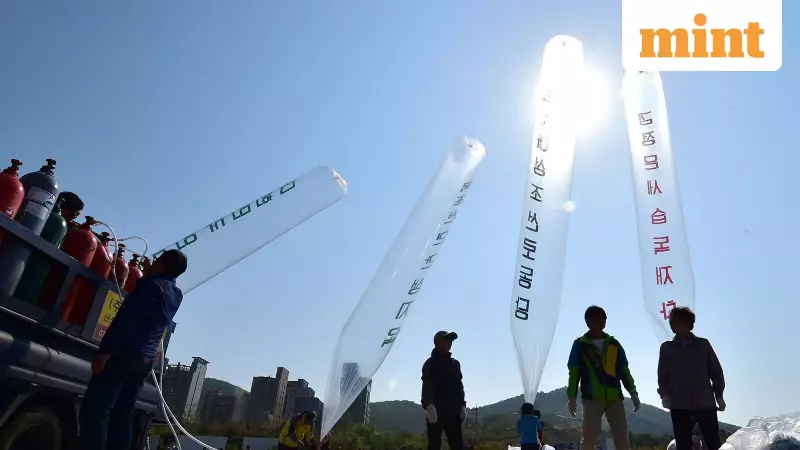
The sonic battle along the world's most fortified border was a symbol of deteriorating relations under the previous conservative administration of President Yoon Suk Yeol (2022-2024). In 2024, Yoon reactivated the loudspeaker broadcasts, which had been silent since 2018, escalating a tit-for-tat propaganda war. South Korean activists sent anti-regime leaflets floating north via balloons, only to receive replies filled with rubbish and excrement from the North.
President Lee, who took office in June 2025, moved quickly to change course. One of his first acts was to silence the South's loudspeakers. Within days, North Korea followed suit, turning off its own noise-making machines, likely because the need to drown out the southern broadcasts had vanished. For border residents, the relief was palpable.

Beyond Loudspeakers: A Broader Concession on Information
However, the quiet extends beyond the loudspeakers. In a more controversial move, South Korea's National Intelligence Service (NIS) has halted its radio broadcasts into the North. These transmissions, which provided uncensored news, had been a constant since 2010. This shutdown came shortly after the Trump administration in the U.S. dismantled its state-funded news services aimed at North Korea.
According to the American think-tank Stimson Centre, the total hours of external programming reaching North Korea have plummeted by roughly 80% since May 2025. The remaining broadcasts come from a handful of activist-run stations transmitting via shortwave from countries like Taiwan and the Philippines. Activists lament that the South Korean government now forbids them from broadcasting from its territory, which would make their signals harder for Northern censors to jam.
This represents a substantial concession to Pyongyang, which views outside information as an existential threat. The regime has dramatically increased punishments for consuming foreign media, including lengthy prison sentences and even execution. Despite the risks, radios remain a vital, if dangerous, lifeline for many North Koreans, as they are easier to hide than TVs and can run on batteries in a country plagued by power shortages.
Strategic Gambit or Dangerous Retreat?
President Lee has defended the radio suspension by calling the medium antiquated, suggesting "everything's searchable on the internet"—a statement he knows is irrelevant for ordinary North Koreans, who are barred from the global web. Analysts like Professor Jun Bong-geun of the Korean National Diplomatic Academy believe Lee is seeking "little things that can stop the situation from worsening" in hopes of coaxing North Korean leader Kim Jong Un back to negotiations.
The critical question is whether this strategy will work. With strengthened backing from China and Russia, and with growing anticipation of a second summit between Kim Jong Un and Donald Trump in 2026, North Korea appears in no desperate hurry to talk to Seoul. Kim Jong Un may believe he can extract major concessions, including recognition of his nuclear arsenal, directly from Washington.
While border villagers enjoy their newfound peace, the broader implications of South Korea's conciliatory silence are still unfolding. The move has undoubtedly reduced immediate tensions, but it also risks diminishing a crucial flow of information into one of the world's most closed societies. The success of President Lee's quiet diplomacy will ultimately depend on whether it leads to meaningful dialogue or simply empowers a recalcitrant Pyongyang.






