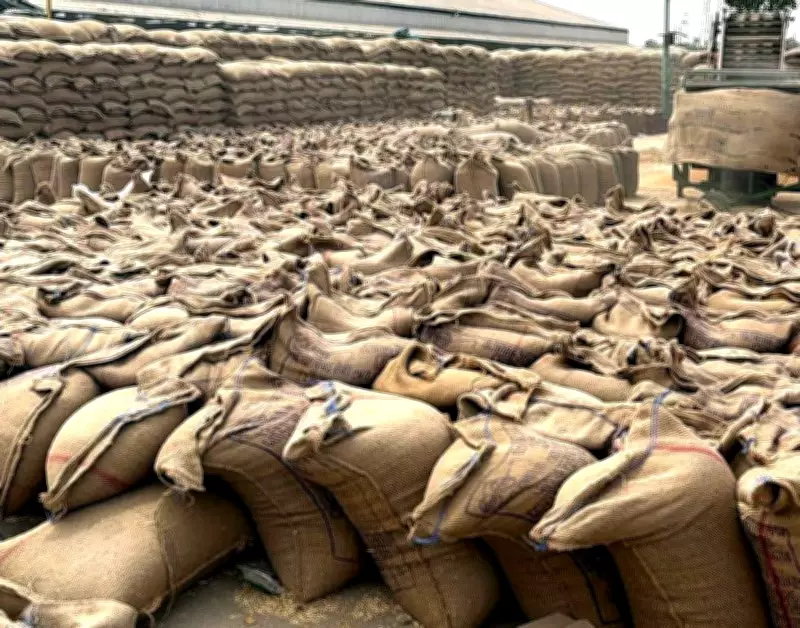
Wheat procurement in the Phagwara mandi has encountered significant hurdles as slow lifting by procurement agencies has led to a backlog of grain. Farmers who have brought their produce to the market are facing extended waiting periods, raising concerns about the efficiency of the procurement process.
Current Situation in Phagwara Mandi
The Phagwara grain market, which typically sees smooth operations during the wheat procurement season, is currently grappling with delays. As of recent reports, large quantities of wheat remain unsold as agencies struggle to lift the grain from the mandi floors. This has resulted in congestion and frustration among farmers, many of whom have traveled long distances to sell their crops.
Impact on Farmers
Farmers are bearing the brunt of the slow lifting process. With limited storage facilities at the mandi, they are forced to wait for days, incurring additional costs for transportation and lodging. Some farmers have expressed concerns that the delay could affect the quality of their produce, especially if exposed to unfavorable weather conditions.

Reasons Behind Slow Lifting
Procurement officials attribute the slow lifting to logistical challenges, including a shortage of gunny bags and inadequate storage space at procurement centers. Additionally, the increased volume of wheat arrivals this season has put pressure on the existing infrastructure.
Government Response
The Punjab government and procurement agencies have assured farmers that steps are being taken to expedite the lifting process. Additional gunny bags are being arranged, and temporary storage facilities are being set up to handle the surplus grain. Officials have urged farmers to remain patient and have promised that all produce will be procured at the minimum support price (MSP).
Measures to Address the Issue
- Deployment of extra staff at procurement centers to speed up the lifting process.
- Arrangement of additional gunny bags from neighboring districts.
- Setting up of temporary storage facilities to reduce congestion at mandis.
- Direct coordination with procurement agencies to ensure timely lifting.
Long-Term Solutions
Experts suggest that the state needs to invest in modernizing its grain storage infrastructure to avoid such bottlenecks in the future. Improved logistics, better planning, and increased use of technology can help streamline the procurement process. The current situation highlights the need for a more robust system to handle the annual wheat harvest.
Meanwhile, farmers continue to hope for a swift resolution to the problem so that they can return to their fields for the next sowing season. The Phagwara mandi incident serves as a reminder of the challenges faced by the agricultural sector in India, despite government assurances of support.