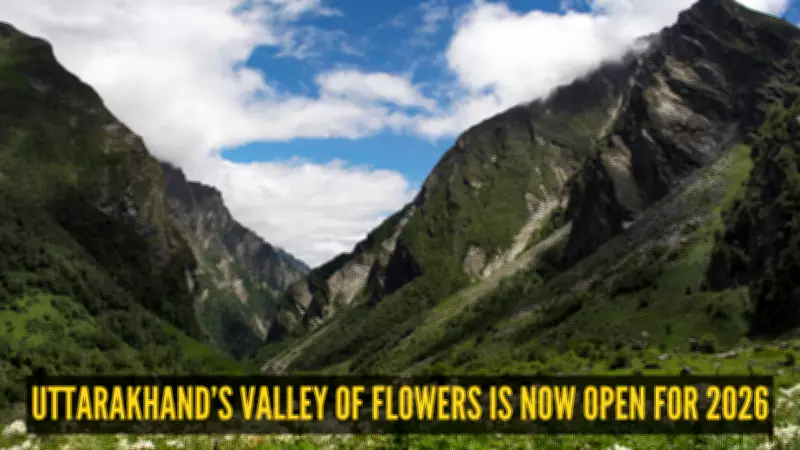
If you have been waiting to witness one of India's most breathtaking seasonal phenomena, now is the time to pack your bags. On June 1, 2026, Uttarakhand's Valley of Flowers National Park officially opened for the season. After months under a thick blanket of snow, the alpine meadows are once again welcoming trekkers, photographers, and nature lovers. This UNESCO World Heritage Site typically remains open until early October, offering a narrow window to experience the landscape that transforms dramatically once the monsoon arrives.
What Makes the Valley of Flowers So Special?
The main attraction is undoubtedly the annual bloom. When the monsoons arrive, the scenery is draped in vibrant thousands of wildflowers. Researchers have documented hundreds of plant species in this high-altitude ecosystem, including several rare Himalayan blooms and medicinal herbs. Among the rare flowers are the Himalayan Blue Poppy, Brahma Kamal, Cobra Lily, Marsh Marigold, and various orchids.
Best Months to Visit
The floral display shifts as summer progresses. In June, melting snow gives way to fresh green shoots, while July brings the first major wave of blossoms. For peak color and variety, August is the best month. By September, flowers begin to fade, but the trade-off is clearer skies and spectacular mountain views.

Rare Wildlife
The park serves as a sanctuary for rare wildlife. Though sightings are uncommon, the area is home to red foxes, blue sheep, Himalayan musk deer, and even the elusive snow leopard.
What Can Travelers Experience Here?
Visitors come not for luxury but for a deeply raw, nature-driven experience. You can spend hours wandering through flower-packed meadows, hopping over clear streams, trekking to the spot, and soaking up the immense peace of the Himalayas. History enthusiasts will appreciate the valley's backstory: it gained global attention in 1931 when British mountaineer Frank S. Smythe stumbled upon the meadow by accident while returning from a successful climb of Mount Kamet. He later wrote a book titled The Valley of Flowers, introducing this hidden gem to the world.
How Difficult Is the Trek?
Rated as moderate, the trek is achievable for most reasonably fit travelers and requires no technical mountaineering skills. The journey on foot begins at Pulna village, near Govindghat. From there, a roughly 9-kilometer hike leads to Ghangaria, the main base camp. The following day, a 4-kilometer trek takes you into the valley itself. Most people complete the round trip in three to four days, though many choose to stay longer to absorb the scenery without rushing.
How to Reach
By rail: Rishikesh and Haridwar are the closest major railway stations, both well-connected to Delhi and other cities. By air: Fly into Jolly Grant Airport in Dehradun, then travel to Rishikesh or Haridwar and onward to Govindghat. The drive passes stunning river confluences and mountain backdrops. From Govindghat, local vehicles are available to Pulna village, where the hiking route begins. Ghangaria is the last inhabited village on the trek route, offering accommodation and food.
Important Things to Know Before Visiting
- Permit: An entry permit is required as the valley is a strictly protected national park.
- Timings: Visitors are allowed inside during specific daytime hours and must hike back out the same day; overnight stay or camping inside the park is prohibited. Trekkers must return to Ghangaria by 5 PM.
- Monsoon preparedness: Monsoon season creates slick trails. Trekking poles and solid waterproof boots are highly recommended. Mobile connectivity is spotty at best along the route. Be prepared for standard rugged mountain conditions.
- Extra destinations: Many trekkers combine this hike with a visit to Hemkund Sahib, a revered Sikh pilgrimage site above Ghangaria, or explore Badrinath and the village of Mana further into the Garhwal Himalayas.
Located at an altitude of around 3,600 meters, the Valley of Flowers is a dream destination now open to tourists for the 2026 season.