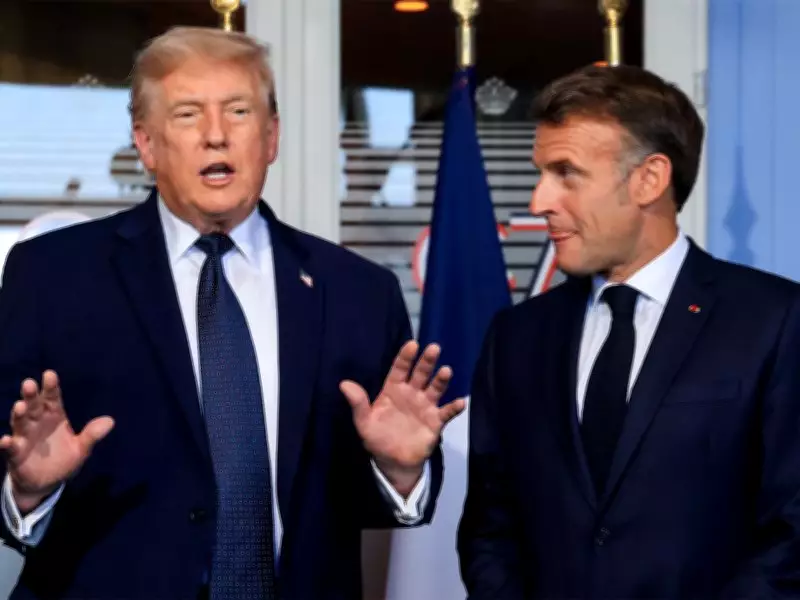
US President Donald Trump on Monday said he might not be present during the signing of the peace deal with Iran, scheduled for Friday. Speaking with reporters during a bilateral meeting with French President Emmanuel Macron at the 52nd G7 Summit in Évian-les-Bains, France, Trump expressed uncertainty about his attendance. However, he confirmed that US Vice President JD Vance would be present at the signing ceremony.
Trump's remarks on attendance
"It depends. JD is coming in for. He was originally going to do. I'll probably be gone by then. We're having dinner in a day and a half, right? We're going to be staying quite late," the US President said. "I may be involved, I may not. But JD was coming in for that specifically," he added.
Digital signing already completed
Earlier in the day, Vice President JD Vance told ABC's Good Morning America that both sides had already "signed the deal digitally," emphasizing that any sanctions relief for Tehran would depend on Iran's compliance with the agreement. "We already signed the deal digitally yesterday, and there's been no money released, and that won't change," Vance said. He stressed that the deal is performance-based, with sanctions relief linked to concrete actions by Iran, such as eliminating enriched material and allowing verification.

"Again, this is a performance-based thing. If we see the Iranians taking action to eliminate their stockpile of enriched material, then sanctions relief will follow. If we see the Iranians taking action to allow the kind of verification regime that we need to see to know that they're not going to build a nuclear weapon, sanctions relief will follow," Vance explained.
Iran's reintegration into global economy
Vance added that the agreement offers Iran an opportunity to reintegrate into the global economy if it adheres to the terms. "This is really about walking down a pathway here where the Iranians will be welcomed into the world economy if they do the right thing," he said.
Challenges and optimism
When asked whether Israel's decision not to be bound by the agreement and to maintain troops in Lebanon could complicate implementation, Vance acknowledged challenges but expressed optimism. "Everything is going to complicate the deal. As you know, in this region of the world, even a ceasefire, sometimes, they're a little bit dirty. It goes from shooting a lot to shooting a little to shooting not at all," he said. However, he described the deal as beneficial for multiple stakeholders: "But what we fundamentally believe is that this is going to be a good deal for the people of Israel, for the people of the Gulf, the people of America, and again, potentially for the people of Iran as well."
Trump earlier stated on Sunday that the deal with Iran was "complete" and that the Strait of Hormuz would reopen after the signing on Friday. He said the "great deal" aims to bring "peace and security" to the entire region.