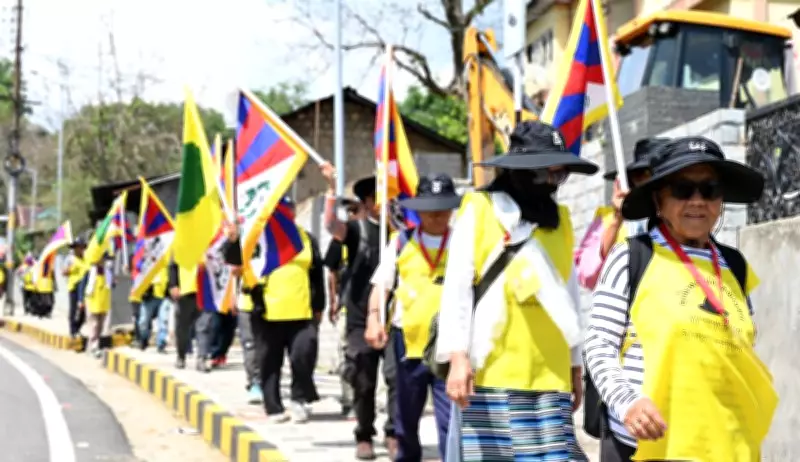
Tibetan Activists Embark on Symbolic Black Hat March to Delhi
In a significant demonstration of peaceful protest, Tibetan activists have commenced a Black Hat March from Dharamsala, the seat of the Tibetan government-in-exile, to the national capital, Delhi. This march, spanning approximately 500 kilometers, is scheduled to last for 20 days, with participants aiming to draw attention to ongoing human rights issues and Chinese policies affecting Tibet.
Purpose and Symbolism of the March
The Black Hat March is deeply symbolic, rooted in Tibetan cultural traditions. The black hats worn by participants represent mourning and resistance, historically used by Tibetan monks during protests. Organizers state that the march serves as a non-violent means to protest against what they describe as oppressive Chinese policies in Tibet, including restrictions on religious freedom, cultural suppression, and environmental degradation.
Activists plan to engage with local communities along the route, sharing stories and raising awareness about the Tibetan struggle for autonomy. The march is expected to pass through key towns and cities, with rallies and public interactions planned to amplify their message.

Route and Logistics
Starting from Dharamsala in Himachal Pradesh, the march will traverse through states like Punjab and Haryana before reaching Delhi. Participants, including monks, students, and civil society members, are walking an average of 25 kilometers per day, braving varying weather conditions. Support vehicles are accompanying the group to provide logistical assistance, including food, water, and medical care.
Security arrangements have been coordinated with local authorities to ensure a peaceful procession, given the sensitive nature of the protest. Organizers emphasize their commitment to non-violence and adherence to Indian laws throughout the journey.
Historical Context and International Reactions
This march echoes similar protests in the past, such as the 2008 Tibetan unrest, but is notable for its duration and scale. Tibetan activists have long used marches and demonstrations to highlight their cause on the global stage, often timing them around significant dates like the anniversary of the 1959 Tibetan uprising.
International human rights groups have expressed support for the march, calling for greater attention to Tibetan issues. However, Chinese authorities have consistently dismissed such protests, labeling them as separatist activities and reiterating their stance on Tibet as an integral part of China.
Impact and Future Implications
The Black Hat March is expected to culminate in Delhi with a large gathering, where activists will submit a memorandum to Indian officials and international bodies, urging diplomatic pressure on China. This event could influence bilateral relations, as India navigates its ties with China while addressing human rights concerns.
Experts suggest that such marches play a crucial role in keeping the Tibetan issue alive in public discourse, potentially inspiring further activism and international solidarity. As the march progresses, it may spark debates on freedom of expression and the role of diaspora communities in advocating for political change.