Taiwan Monitors Chinese Naval Activity Near Its Waters
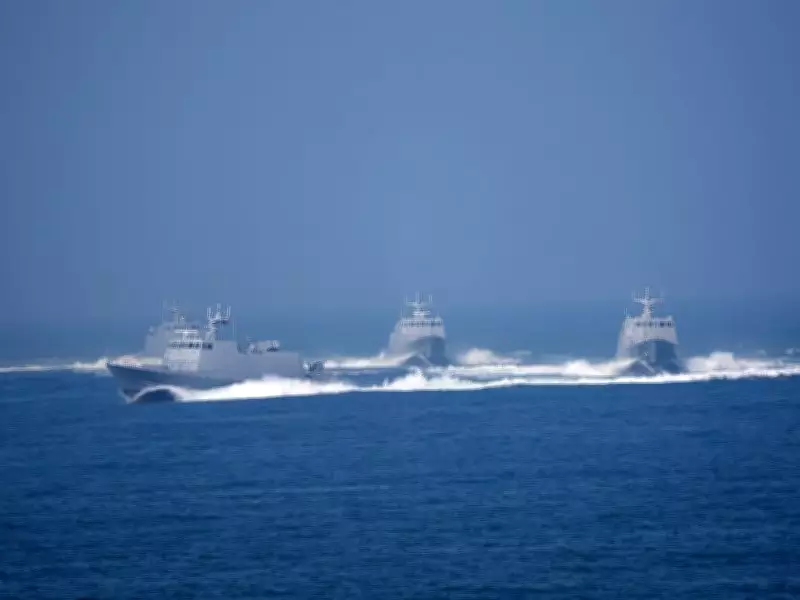
In a recent development, Taiwan's Ministry of National Defense (MND) has detected a significant presence of Chinese vessels operating around its territorial waters. As of 6 a.m. local time on Monday, March 23, 2026, the MND reported tracking seven Chinese naval vessels and three official ships in the vicinity.
Official Statement and Monitoring
In a post on the social media platform X, the MND stated, "7 PLAN vessels and 3 official ships operating around Taiwan detected up until 6 a.m. (UTC+8) today. ROC Armed Forces have monitored the situation and responded. No flight path illustration is provided, as we did not detect PLA aircraft operating around Taiwan during this timeframe." This announcement underscores Taiwan's vigilance in monitoring regional activities, with the Republic of China (ROC) Armed Forces actively responding to the situation.
Previous Incidents and Escalating Patterns
This event follows a similar detection on Sunday, March 22, 2026, when Taiwan identified six Chinese naval vessels and one official ship in the same area. The MND's consistent reporting highlights a pattern of increased Chinese maritime activity near Taiwan, raising concerns about regional stability. In both instances, no People's Liberation Army (PLA) aircraft were detected, suggesting a focus on naval operations.

Historical and Political Context
The presence of Chinese vessels near Taiwan is rooted in a complex historical and political dispute. China asserts that Taiwan is an inseparable part of its territory, a claim supported by domestic laws and international policies. However, Taiwan operates as a de facto independent entity with its own government, military, and economy, maintaining a distinct identity.
Key historical points include:
- Taiwan was annexed by the Qing Dynasty in 1683 but remained under limited control.
- In 1895, Taiwan was ceded to Japan after the First Sino-Japanese War, becoming a colony for 50 years.
- After World War II, Taiwan was returned to Chinese control, though sovereignty was not formally established.
- The Chinese Civil War in 1949 led to the establishment of the People's Republic of China (PRC) on the mainland, while the Republic of China (ROC) retreated to Taiwan, claiming governance over all of China.
This dual sovereignty claim has resulted in ongoing tensions, with Taiwan avoiding a formal declaration of independence to prevent military conflict with China, as noted by sources like the United Service Institution of India. The situation continues to test international principles of sovereignty and self-determination.
Implications and Regional Dynamics
The detection of Chinese vessels near Taiwan's waters adds to the growing geopolitical tensions in the Asia-Pacific region. Such incidents are closely watched by global observers, as they reflect broader strategic maneuvers and could impact diplomatic relations. Taiwan's proactive monitoring and response efforts demonstrate its commitment to safeguarding its territorial integrity amid these challenges.
As developments unfold, the international community remains attentive to how these actions might influence cross-strait relations and regional security frameworks. The absence of PLA aircraft in recent detections may indicate a tactical shift, but the overall pattern suggests persistent pressure from China on Taiwan's sovereignty.