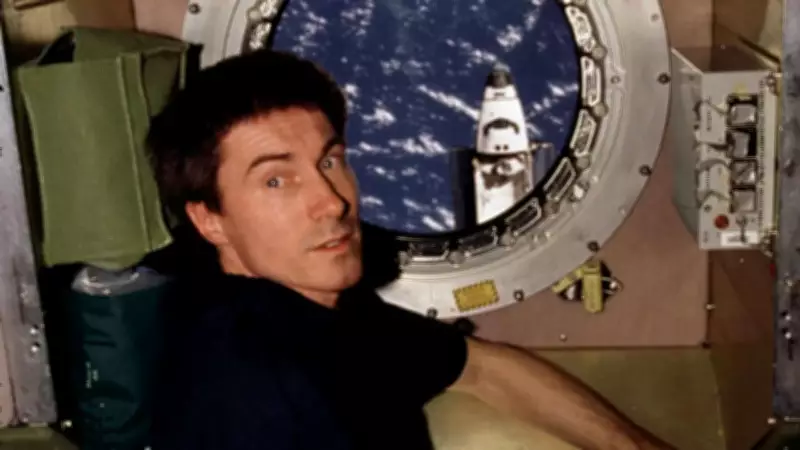
Sergei Krikalev: The Cosmonaut Who Watched His Country Vanish from Orbit
In May 1991, Sergei Krikalev embarked on what was supposed to be a standard five-month mission to the Mir space station. As a trained cosmonaut, his duties included conducting scientific experiments, maintaining critical equipment, and ensuring the station remained operational. At the time, everything appeared routine and predictable, with Krikalev focused on the tasks ahead in the vast expanse of space.
A World in Turmoil Below
While Krikalev orbited Earth approximately 400 kilometers above its surface, the situation on the ground was anything but stable. The Soviet Union, the nation that had trained and launched him, was engulfed in profound political and economic chaos. Republics were declaring independence, the Communist Party faced internal divisions, and a coup attempt added to the escalating disorder. Unbeknownst to Krikalev, he was trapped in orbit, thousands of kilometers away from a world undergoing rapid and unpredictable transformation.
Due to funding shortages and the collapsing political system, delays plagued the cosmonaut rotation program. What began as a five-month mission stretched into an unprecedented ten-month ordeal. Krikalev ended up spending over 311 days in space, orbiting Earth roughly 5,000 times. When he finally returned, the Soviet Union had ceased to exist, replaced by fifteen independent countries with redrawn borders and renamed cities.
The Physical and Psychological Toll of Extended Spaceflight
Living in microgravity presents severe physical challenges, including muscle atrophy and bone density loss. NASA reports indicate that long-term exposure to space increases risks of radiation-related illnesses and can compromise immune function. Beyond the physical strain, psychological factors play a critical role. Isolation and limited communication exacerbate stress, particularly when the world below is in upheaval.
Krikalev maintained contact with Earth through the station's radio system, with casual conversations serving as a vital lifeline. These interactions helped him preserve a connection to a planet that seemed to be slipping away. His wife, Alina Terekhina, a radio operator in the Soviet space program, reportedly shielded him from the full extent of the political turmoil, telling him everything was fine to minimize his stress.
Returning to a Transformed World
By October 1991, Kazakhstan had declared sovereignty, and on December 25, Mikhail Gorbachev resigned, marking the formal end of the Soviet Union. Krikalev returned to a world that was both familiar and fundamentally altered. Readjusting to gravity required extensive rehabilitation, but the social and political landscape had shifted dramatically. He faced the daunting task of adapting to a new reality where his homeland no longer existed.
Legacy and Symbolism of Krikalev's Mission
Sergei Krikalev emerged from this experience as more than just an astronaut; he became known as the last citizen of the Soviet Union. His story captured global attention, symbolizing endurance, duty, and human connection during a period of immense uncertainty. In 2000, he joined the inaugural crew of the International Space Station, contributing to a new era of international cooperation in space exploration.
Yet, his first mission remains unparalleled—a ten-month journey in orbit, witnessing history from a unique vantage point as his country dissolved below. Krikalev's ordeal stands as a testament to resilience amid chaos, highlighting the intersection of human endeavor and geopolitical change.