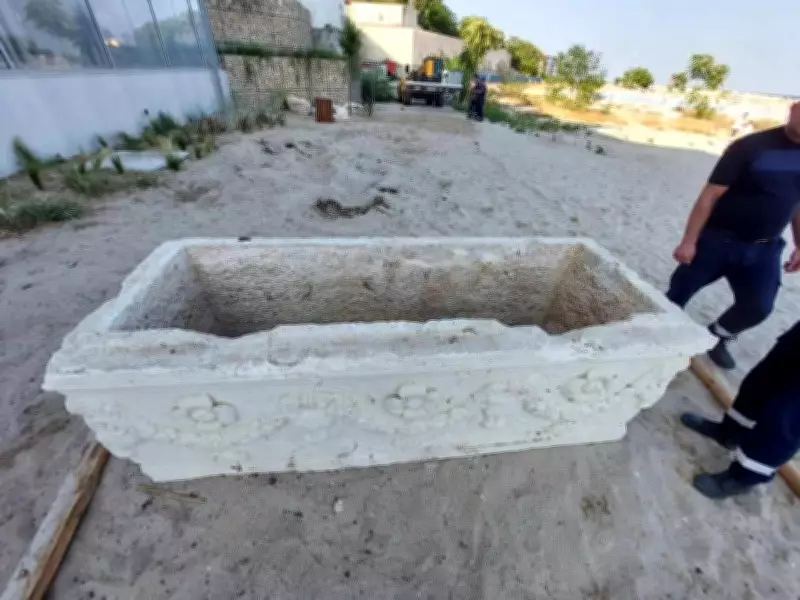
In July 2024, vacationers at Radjana Beach near Varna on the Bulgarian Black Sea coast made an extraordinary discovery. An observant tourist noticed that a bar counter at a local catering establishment featured elaborate carvings resembling ancient art. Upon inspection, municipal authorities and experts from the Regional History Museum in Varna confirmed the object was a genuine Roman sarcophagus dating back approximately 1,700 years.
The Discovery
The sarcophagus had been repurposed as a serving counter, painted with modern exterior wall paint and topped with a stone tabletop. Tourists had been unknowingly placing their drinks on the ancient coffin for about four years. The artifact, classified as a "garland sarcophagus," features reliefs of floral swags, grape bunches, rosettes, and animal heads. It is made of shelly limestone unique to northwestern Bulgaria, indicating it was transported a long distance to the seaside location.
Historical Context
Varna, known as Odessos during the Roman Empire, was a prosperous trade and transport hub. The sarcophagus dates to the second century CE, a period of Roman rule in Eastern Europe. Its intricate funerary art allowed experts to pinpoint its origin and age.

Legal and Conservation Issues
Bulgarian law mandates that all archaeological objects belong to the state. A pre-trial investigation was launched by local police and prosecutors to determine how the sarcophagus ended up at the beach resort. Museum archaeologists emphasized that finders must surrender such artifacts to heritage agencies.
Recovery and Preservation
To secure the sarcophagus, heavy cranes and special transport vehicles from the civil protection department were used to move it to the Varna Archaeological Museum. The discovery highlights challenges in preserving ancient heritage in coastal regions, where artifacts can be misused or overlooked.
The TOI Science Desk, a team of journalists dedicated to covering scientific discoveries, reported on this unusual find, underscoring the importance of public awareness in protecting cultural heritage.