

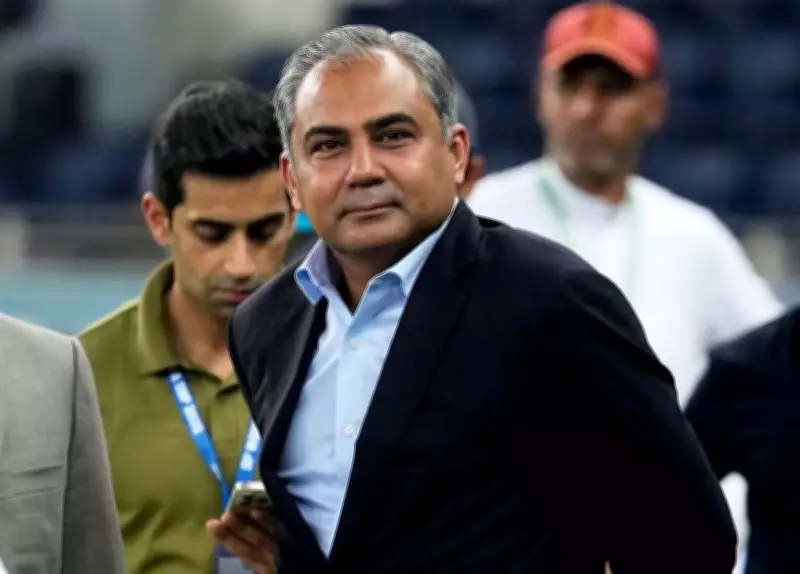
Pakistan has intensified its efforts to revive the stalled US-Iran dialogue, with Interior Minister Mohsin Naqvi traveling to Tehran carrying a message for Iranian Supreme Leader Mojtaba Khamenei, according to media reports. Naqvi arrived in Iran on Saturday night and was received by his Iranian counterpart, Eskandar Momeni. The two officials had previously met during the week in Bishkek on the sidelines of a Shanghai Cooperation Organisation (SCO) meeting.
The Dawn newspaper, citing Iran's official news agency IRNA, reported that Naqvi was carrying an "important message" from Chief of Defence Forces Field Marshal Asim Munir for Khamenei. Diplomatic sources indicated that Naqvi's mission is part of Pakistan's broader effort to prevent the collapse of a ceasefire arrangement that Islamabad helped broker earlier this year and to create space for the resumption of meaningful negotiations between Washington and Tehran.
The ceasefire, reached in April after weeks of intense fighting involving Iran, the US, and Israel, remains formally in place but has been repeatedly tested by military incidents in and around the Gulf region. The interior minister held consultations with Prime Minister Shehbaz Sharif and other senior officials before departing for Tehran. The visit comes at a delicate moment in the diplomatic process that Pakistan has been facilitating for months, as indirect negotiations between Washington and Tehran have drifted into what diplomats describe as a "fragile stalemate."

Recent exchanges involving US strikes on Iranian military assets and Iranian retaliatory actions have further complicated efforts to move negotiations beyond crisis management towards a more comprehensive political understanding, according to Dawn. At the center of the deadlock are disagreements over Iran's enriched uranium stockpile, its enrichment program, the future of sanctions, the reopening of the Strait of Hormuz, and regional security issues.
While US President Donald Trump has repeatedly claimed that negotiations remain active and that progress is being made towards a deal, Iranian officials have struck a far more cautious tone. Iranian Foreign Minister Abbas Araghchi recently stated that there had been no tangible progress in the talks and that Tehran was still reviewing proposals conveyed through intermediaries. Diplomatic sources familiar with the process said both sides remain far apart on key questions, particularly Washington's demand for substantial restrictions on Iranian enrichment activities and Tehran's insistence that its right to peaceful enrichment remains non-negotiable.
Complicating matters further is the Lebanon question, which Iranian officials increasingly view as linked to the broader diplomatic track. Tehran has repeatedly argued that any durable arrangement must address developments across all theaters of confrontation, including Lebanon, while Washington has sought to treat the Lebanon-Israel track separately from the nuclear and sanctions negotiations. Against this backdrop, Naqvi's discussions in Tehran are expected to focus not only on the state of the US-Iran talks but also on regional issues that continue to affect prospects for a settlement.
Besides talks with Interior Minister Momeni, the Pakistani minister is expected to meet Foreign Minister Araghchi and President Masoud Pezeshkian. Meetings with parliament speaker Mohammad Bagher Ghalibaf and Secretary of Iran's Supreme National Security Council Bagher Zolghadr are also expected, according to Iranian sources. The significance attached to the visit has fueled speculation that Islamabad may be attempting to inject fresh momentum into a process that appeared to be losing traction after weeks of military incidents and diplomatic setbacks.

In a related development, Lebanese Army Commander General Rodolphe Haykal left for Pakistan on Saturday on an official visit. The Lebanese Armed Forces announced that the visit was being undertaken at the invitation of General Haykal's Pakistani counterpart, but did not disclose details of its agenda or duration. Officially, the trip is being described as part of ongoing military-to-military cooperation and discussions on training and institutional support. However, the timing of the visit has generated speculation because it coincides with Pakistan's efforts to overcome obstacles in the US-Iran negotiations and follows renewed tensions in southern Lebanon.
Lebanon has increasingly emerged as one of the factors complicating the broader diplomatic process. President Joseph Aoun has recently called for strengthening state authority and reducing the role of non-state armed groups, while Iranian officials have strongly rejected suggestions that Tehran uses Lebanon as leverage in its dealings with Washington. Iran has also linked progress in its discussions with the US to developments on what it describes as other fronts of the conflict, including Lebanon. Western diplomats say the Lebanese armed forces are expected to play an important role in any future security arrangements in southern Lebanon and have therefore become an important part of regional stabilization efforts, according to Dawn.





