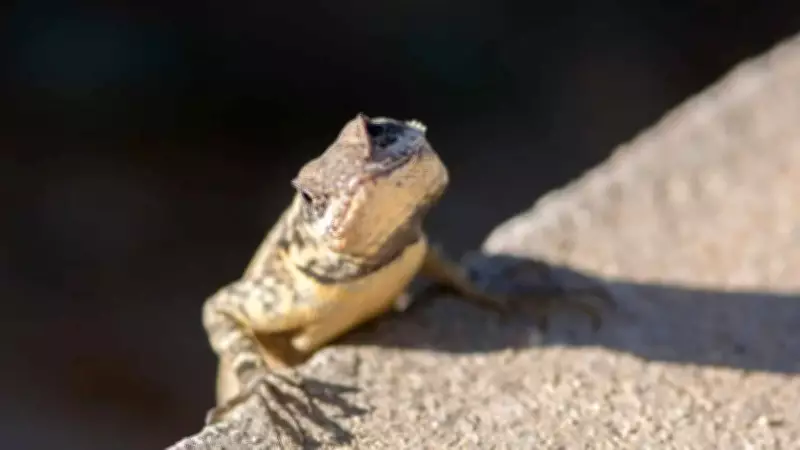
Have you ever noticed how some lizards seem to perform push-ups when standing against a wall, rock, or tree branch? Many people wonder whether they are exercising, but this is actually one way lizards communicate with their surroundings. Scientists have studied this behavior and concluded that lizard push-ups are used in visual communication with other members of their kind.
Not Just Exercise
It is interesting to note that lizards have great vision, unlike many other animals whose communication relies heavily on sounds. Some species are very communicative and express themselves through body movements. A push-up display makes a lizard stand out and sends messages to others from afar without making a noise. This behavior is common among territorial species such as anoles, iguanas, and fence lizards.
Message 1: This Space Is Mine
According to a report by The Environmental Literacy Council, one of the most frequent reasons for doing push-ups is defending territory. Lizards typically reside in areas with food sources, basking spots, and females. If another male intrudes, the resident lizard starts push-ups to claim ownership. This display tells the other lizard, “I am here, I am strong, so get out of my place.” Often, the rival gives up after this display, avoiding unnecessary fights and saving energy.

Message 2: Look How Fit I Am
Push-ups are important in courtship as well. Males engage in displays to attract females during breeding season. These displays indicate good physical fitness, muscles, and strong genes. Male lizards of species such as anoles combine push-ups with colorful dewlaps in their mating rituals. Females may judge these displays before selecting a mate. Sometimes, females also do displays to signal receptiveness to nearby males. To a female, such a display amounts to a living billboard of his fitness.
Message 3: I Have Seen You
Lizards also use push-ups to signal possible danger. When a predator approaches, lizards sometimes perform push-ups before running away. This warns the predator that it has been seen, potentially deterring an attack because the lizard is alert and ready to flee. Experts refer to this phenomenon as “stotting,” similar to when gazelles perform such acts in front of cheetahs.
Each Species Has Its Unique Accent
Push-ups by different lizard species do not resemble each other. Some have slower patterns, while others have rapid head-bobbing patterns. Scientists believe these unique patterns allow lizards to distinguish between individuals of the same species and avoid mistaking them for other reptiles. The rhythm of push-ups has become an accent in their language.
Does It Warm Them Up During Exercise?
Some researchers have suggested that because lizards are cold-blooded, they need extra warmth. It is possible that during push-ups, they generate some heat through muscle activity. However, scientists tend to view push-ups primarily as an important form of communication among lizards.
Lizards doing push-ups may resemble gymnasts exercising, but their actions have nothing to do with physical fitness benefits. Instead, push-ups are a vital communication tool. For instance, a lizard seeing its territory invaded will begin push-ups to demonstrate its strength over the intruder.