

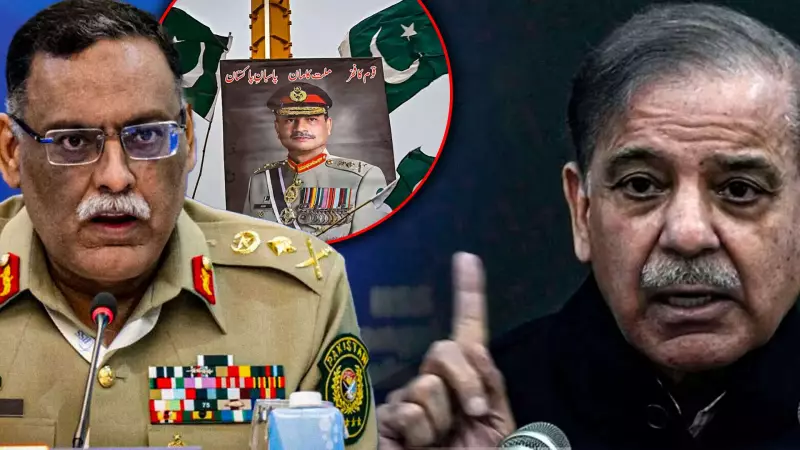
In a dramatic farewell address that marks a significant turning point in Pakistan's military history, outgoing General Sahir Shamshad Mirza has issued a stark warning about evolving security threats facing the nation. The senior army official emphasized that Pakistan must prepare for a spectrum of conflicts ranging from hybrid destabilization to full-scale military confrontations.
Historic Military Restructuring Underway
General Mirza's warning comes precisely as Pakistan implements the historic 27th Constitutional Amendment, which effectively abolishes his position and establishes the powerful new role of Chief of Defence Forces. This landmark constitutional change centralizes unprecedented authority under Field Marshal Asim Munir, who now becomes Pakistan's most influential uniformed figure since the era of Ayub Khan.
The restructuring allows Munir to remain in his commanding position until 2030, granting him extended oversight during a period of significant regional instability and internal challenges. This consolidation of power represents the most substantial shake-up in Pakistan's military command structure in decades.

Evolving Threats Demand Unified Response
During his farewell speech, General Mirza outlined the complex nature of modern security challenges. He identified hybrid destabilization campaigns, cyber warfare operations, and psychological operations as critical emerging threats that complement traditional military confrontations.
The general stressed that these multidimensional dangers require a completely unified strategy across all branches of Pakistan's armed forces. He specifically highlighted organizational reform, enhanced capability development, and institutional honesty as what he termed "practical necessities" for national survival.
Mirza's remarks gain particular significance given Pakistan's current situation, where the nation faces simultaneous challenges including:
- Severe economic instability and potential collapse
- Ongoing internal political turmoil
- Heightened regional tensions with neighboring countries
- Increasingly sophisticated hybrid warfare tactics
Power Shift Reshapes Pakistan's Future
The timing of this military restructuring coincides with one of Pakistan's most challenging periods in recent history. The elevation of Field Marshal Asim Munir to such concentrated authority suggests a strategic pivot toward centralized decision-making during times of crisis.
Analysts suggest this power consolidation reflects the military establishment's response to what they perceive as existential threats from multiple fronts. The creation of the Chief of Defence Forces position effectively streamlines command structures that previously operated with more distributed authority.
As Pakistan navigates this significant transition in military leadership and confronts the hybrid warfare threats outlined by General Mirza, the international community watches closely. The nation's ability to address its economic challenges while maintaining security stability will likely determine its regional standing for years to come.
The warning from Pakistan's outgoing military leader serves as both a cautionary statement and a rallying cry for institutional reform at a moment when the country faces some of its most complex security challenges since independence.






