Japan activated its nationwide emergency alert system on Saturday following a provocative ballistic missile launch by North Korea, sharply escalating regional security tensions and casting a shadow over diplomatic engagements in East Asia.
Emergency Alert and Immediate Response
The Prime Minister's Office of Japan confirmed the development in a post on the social media platform X. The alert was triggered after the launch was detected earlier in the day, with authorities urgently assessing the situation.
The official post stated, "North Korea has launched a suspected ballistic missile. More updates to follow." Initial reports did not specify the missile's flight path, its range, or whether it impacted within Japan's Exclusive Economic Zone (EEZ).
Japan's Ministry of Defence later indicated that the missile was believed to have already completed its flight and fallen. The ministry emphasized it was maintaining close surveillance and coordinating information with allied nations.
Multiple Launches and Regional Vigilance
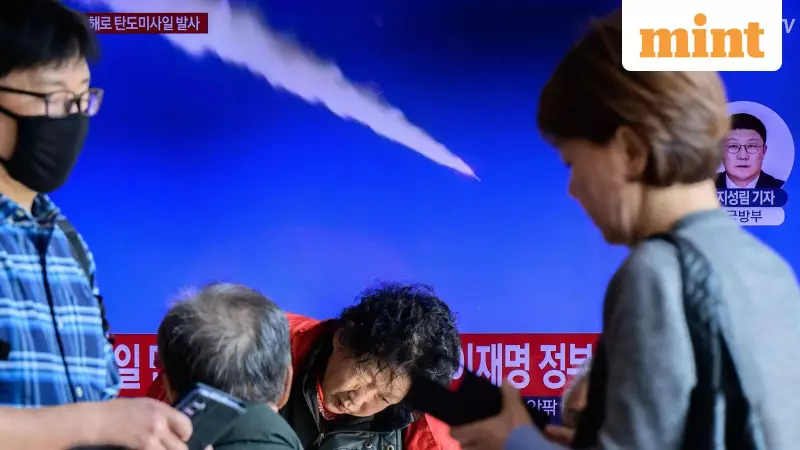
According to South Korea's military, North Korea fired several ballistic missiles from the area near its capital, Pyongyang, towards the sea off its eastern coast at approximately 7:50 a.m. local time on Sunday.
The Joint Chiefs of Staff (JCS) of South Korea released a statement confirming the launches. "Our military has strengthened surveillance and vigilance in preparation for further launches," the JCS said, adding that real-time intelligence was being shared with the United States and Japan.
This event marks Pyongyang's first ballistic missile test in nearly two months, with the previous such activity reported back in November 2023. The launches have prompted heightened military alert levels in both Japan and South Korea, highlighting the persistent fragility of security in the region.
Diplomatic Stakes and Kim's Weapons Push
The missile tests occur at a diplomatically sensitive moment. South Korean President Lee Jae Myung is scheduled to begin a state visit to China on Sunday, where discussions are expected to focus heavily on peace and stability on the Korean Peninsula.
President Lee is set to meet with Chinese leader Xi Jinping. Wi Sung-lac, Lee's national security adviser, noted that Seoul anticipates Beijing will play a constructive role in fostering peninsula peace, though specific agenda details were not disclosed. Analysts suggest President Lee is likely to urge China to help restart dialogue with North Korea, which has recently rebuffed outreach from Seoul's new administration.
The launches follow a series of high-profile activities by North Korean leader Kim Jong Un. On Saturday, state media reported that Kim visited a munitions factory and called for more than doubling the production capacity of tactical guided weapons. In recent weeks, Kim has also toured multiple weapons factories, inspected a nuclear-powered submarine, and overseen missile tests ahead of the country's upcoming Ninth Party Congress.
While no immediate damage or casualties have been reported from the latest launches, the incident serves as a stark reminder of the ongoing security challenges and the complex diplomatic landscape in East Asia.