

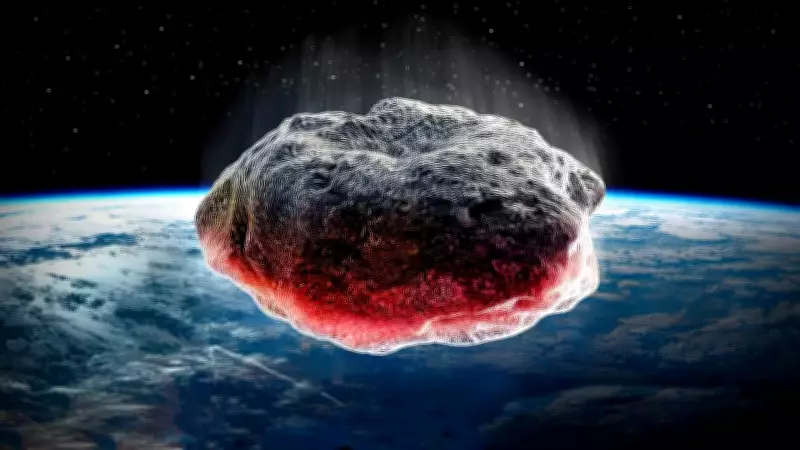
NASA Announces Close Approach of Asteroid 2026 FM3 to Earth in 2026
In a significant astronomical update, NASA has officially confirmed that an asteroid designated as 2026 FM3, with dimensions similar to a standard car, is set to make a remarkably close approach to our planet on March 25, 2026. This event will see the asteroid passing at a distance even closer than the orbit of the Moon, providing a unique observational opportunity for scientists worldwide.
Details on Asteroid 2026 FM3: Size, Characteristics, and Trajectory
Asteroid 2026 FM3 is estimated to measure approximately 15 feet (4.5 meters) in diameter, placing it in the category of a minor near-Earth object due to its relatively small size. Experts note that if this asteroid were to collide with Earth, it would not survive passage through the atmosphere, as the intense heat generated by atmospheric friction would cause it to disintegrate completely before reaching the surface.
The projected distance of its flyby is around 238,000 kilometers from Earth. To put this into perspective, the average distance to the Moon is about 384,000 kilometers, making this approach notably closer. NASA scientists have utilized advanced radar and optical observations to accurately calculate the trajectory of 2026 FM3, ensuring precise predictions for its orbital path.

Scientific Significance and Planetary Defense Implications
Monitoring such close approaches is a critical component of global planetary defense efforts. The flyby of asteroid 2026 FM3 does not pose any threat to Earth, but it serves as an invaluable chance for astronomers to gather detailed data on its size, orbit, and composition. This information is essential for refining models that track and predict the movements of near-Earth objects, thereby enhancing early warning systems.
NASA and other international space agencies leverage data from events like this to improve detection capabilities and develop strategies to mitigate potential hazards from larger asteroids in the future. The observation of 2026 FM3 will also allow for testing and calibration of observational technologies, contributing to more accurate future assessments.
Frequency of Small Asteroid Flybys and Atmospheric Behavior
Approaches by small asteroids, such as 2026 FM3, are more common than many people realize. Numerous minor objects pass near Earth each year, often going undetected due to their diminutive size. In the event of atmospheric entry, an object of this scale would undergo ablation, producing a bright fireball visible from the ground—a phenomenon that, while scientifically fascinating, poses no risk to human life or property.
This behavior aligns with established predictions for small near-Earth objects and underscores the importance of continuous monitoring to better understand these celestial visitors.
As NASA continues to lead efforts in space observation, the close approach of asteroid 2026 FM3 in 2026 stands as a reminder of the ongoing work to safeguard our planet while advancing our knowledge of the cosmos.






