Lonar Crater Lake: Maharashtra's Ancient Meteorite Impact Site
A lake born from the sky. That's how Lonar Crater Lake is often poetically described, and once you witness its serene beauty, the phrase resonates deeply. Hidden within Maharashtra's Buldhana district, this geological marvel appears calm and ordinary at first glance. Almost too tranquil. Trees encircle the water's edge, ancient temples stand quietly along the rim, and birds glide across the sky with effortless grace. Nothing about its present appearance hints at the cataclysmic event that shaped it. Yet, the story beneath the surface is far from gentle.
The Violent Origin of a Peaceful Lake
Thousands of years ago, a meteorite struck this exact location with unimaginable force, creating the massive crater that later filled with water. Today, Lonar Crater Lake serves as a fascinating meeting point where nature, science, and history converge, with a violent past resting quietly beneath a placid exterior.
Experts explain that a meteorite slammed into the basalt rock of the Deccan Traps at hyper-velocity, carving out a bowl nearly 1.8 kilometres wide and approximately 150 metres deep. This geological detail is crucial. Lonar is believed to be the only known hyper-velocity impact crater on Earth formed entirely in basalt rock, making it a unique site for scientific study.

Dating the Ancient Impact
Determining the exact age of the impact has always presented challenges for researchers. Some estimates suggest the crater is more than 500,000 years old, while others place it closer to 52,000 years. Regardless of the precise timeline, it remains ancient enough to feel timeless. Standing at the crater's rim, the landscape feels otherworldly, more like a quiet scar left by cosmic forces than a typical part of Maharashtra.
Unique Water Chemistry and Microbial Life
The lake within the crater does not behave like ordinary freshwater bodies. Its water is both saline and alkaline, with pH levels reportedly nearing 11. Such extreme conditions are too harsh for most plants and animals, yet life persists in remarkable ways.
Microbial communities thrive here, including nitrogen-fixing organisms that flourish in conditions most life would avoid. Along the edges, evaporating water leaves behind soda and carbonate salts. These minerals were historically collected by local communities long before scientists began studying the lake's unique chemistry.
The Colour-Changing Phenomenon
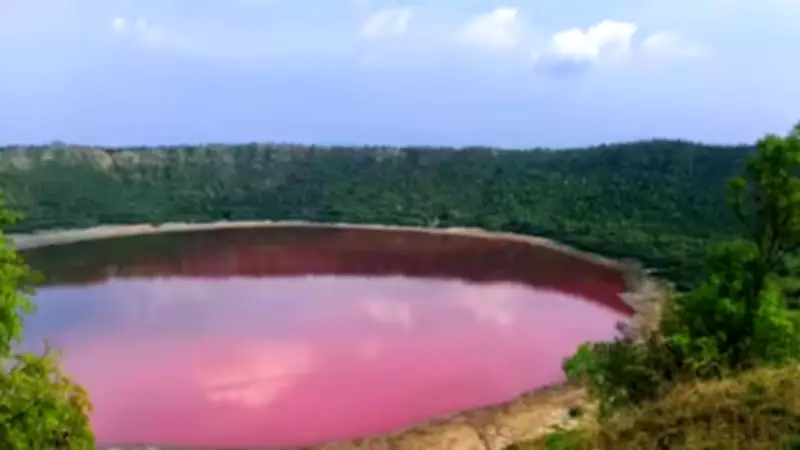
Lonar Lake does not maintain a consistent colour. Some days it appears blue, at times green, and occasionally even pink. These transformations occur with seasonal changes and shifts in water chemistry. The lake's salty and alkaline nature influences the tiny organisms living within it.
Certain microbes release natural pigments that tint the water. For example, Halobacteriaceae and Dunaliella salina can give the lake a reddish hue. Green shades emerge when algae experience rapid growth. Scientists often refer to Lonar as a living laboratory due to these unusual and dynamic colour shifts.
The combination of salty and alkaline water is exceptionally rare, often surprising experts who observe it occurring naturally. Satellite imagery and water testing confirm this unusual balance exists. The lake also provides valuable insights into extremophiles, microscopic organisms that survive in extreme conditions, whose activities drive the dramatic colour changes.
Biodiversity and Cultural Heritage
Despite the harsh aquatic environment, the land surrounding Lonar teems with life. The crater sits within the Lonar Wildlife Sanctuary, spanning approximately 365 hectares. Dry deciduous forests envelop the lake, creating habitats for diverse wildlife.
- Langurs leap gracefully through the trees
- Deer move quietly between patches of shade
- Wild boar leave distinctive tracks in the dust
- Monitor lizards bask in the sun near walking paths
Around 160 bird species have been documented here, including black-winged stilts, brahminy ducks, teals, and numerous others. During winter months, migratory birds arrive in significant numbers, enhancing the area's avian diversity.

Ancient texts such as the Skanda Purana and Ain-i-Akbari mention Lonar, highlighting its historical significance. Temples line the crater's rim and basin, many now weathered by time. The most renowned is the Daitya Sudan Temple, dedicated to Lord Vishnu's victory over the demon Lonasura. Constructed in the Hemadpanthi architectural style, it continues to attract pilgrims and historians alike.
Lonar Crater Lake stands as a testament to Earth's dynamic history, where cosmic violence has given way to ecological wonder and cultural reverence. This unique destination offers visitors a chance to contemplate the intersection of geological forces, biological adaptation, and human heritage in one remarkable location.