

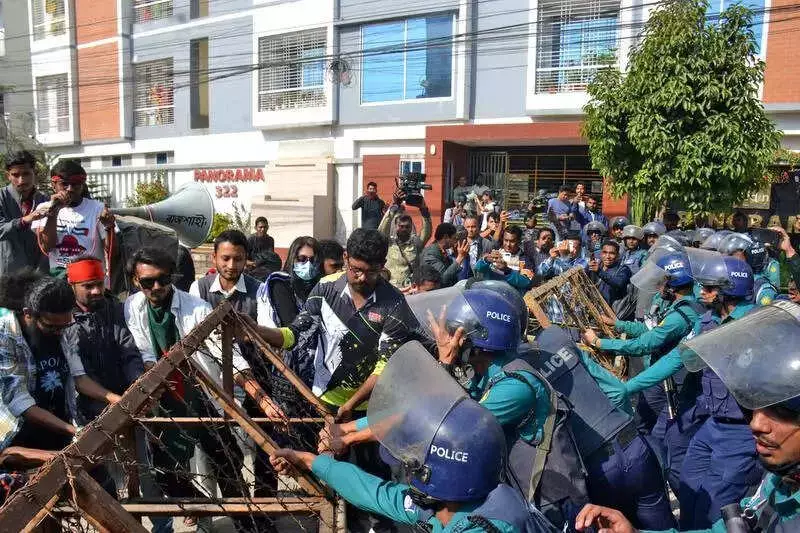
Families residing in Kolkata are gripped by fear and uncertainty as violent protests and unrest escalate across the border in Bangladesh. Disturbing television visuals of arson and vandalism have prompted frantic efforts to contact loved ones in Dhaka and other affected areas, with many facing communication blackouts and severe anxiety.
Communication Blackouts Fuel Panic in Kolkata
The situation became intensely personal for the relatives of Dibyendu Bhattacharya, an IT professional based in Dhaka. As news of the violence spread, his family in Kolkata's Birati neighbourhood began making desperate calls. Baidya Nath Sarkar, a relative in Kolkata, revealed the terrifying moments when communication lines failed.
"When the news of violent protests broke, I tried calling him repeatedly. There was no response for a long time," Sarkar said. The family's fear was compounded by relentless TV coverage showing buildings being ransacked and set ablaze. "It left us in panic," he added. Although Dibyendu was later confirmed safe, the volatility of the situation means worry persists until peace is fully restored.

Another family member highlighted the psychological toll of such crises on divided families. "When someone is living across the border, even a short communication gap creates unbearable anxiety, especially during periods of unrest like this," they explained. The initial network congestion and downed phone lines made confirming safety a major challenge.
Medical Treatment in Jeopardy Due to Visa Suspension
The unrest has had consequences beyond immediate safety concerns, severely disrupting essential services like healthcare. Dola Banerjee, a Bangladeshi national suffering from kidney ailments, now faces a medical crisis. She had travelled to Kolkata in November for medical consultation and was scheduled for a critical follow-up appointment in January at Manipal Hospital.
However, the suspension of visa services in the wake of the border unrest has thrown her treatment plan into complete disarray. Her relative, Sreemoyee Banerjee, based in Barasat, expressed grave concern over this development. "The doctor's consultation is crucial for her condition. We don't know how she will meet the doctor or continue her treatment if the visa issue is not resolved," she stated. This case underscores how political and social instability can directly impact life-saving healthcare access.
A Community Living in Fear
The collective sentiment across many households in Kolkata with ties to Bangladesh is one of profound distress and helplessness. The physical distance, coupled with unreliable communication during the crisis, has created a potent mix of fear. Families are stuck in a cycle of watching alarming news reports and attempting to piece together information from sporadic contacts.
The anxiety is not limited to those with family in protest zones; even Bangladeshi nationals receiving medical treatment in India, like Dola Banerjee, are caught in the crossfire of disrupted diplomatic and administrative processes. The situation highlights the deep, human interconnectedness between the two regions, where events on one side immediately ripple into homes on the other.
For now, the primary hope for these anxious families in Kolkata is a swift return to normalcy and peace in Bangladesh, allowing safe communication and the resumption of essential cross-border movement for health and family unity.






