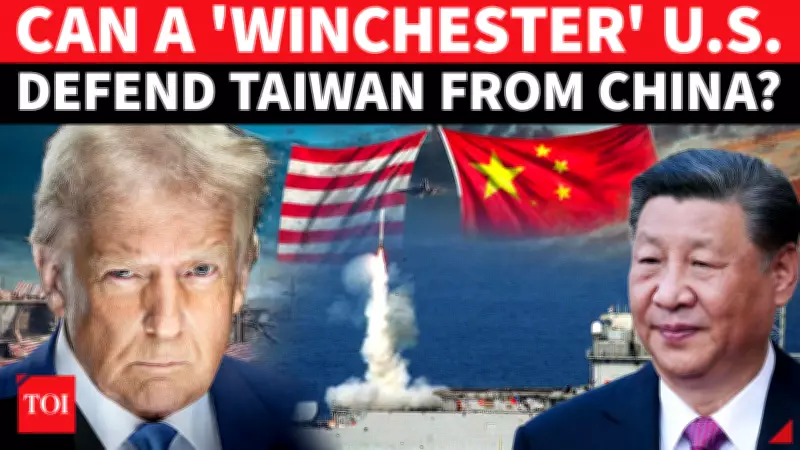
In a 39-day conflict with Iran, the United States expended over a thousand Tomahawk cruise missiles and between 1,500 and 2,000 air-defense interceptors, including THAAD, Patriot, and Standard Missiles. This unprecedented rate of expenditure has led serious strategists to question whether Washington retains sufficient munitions to defend Taiwan from a potential Chinese invasion.
Strategic Vulnerability in the Pacific
The Center for Strategic and International Studies (CSIS) has characterized the situation as a "window of increased vulnerability" in the western Pacific. Even before the Iran campaign, US stockpiles were deemed insufficient for a conflict against a peer competitor like China. The gap has now measurably worsened, with rebuilding efforts expected to take years.
China's Calculus
While US intelligence assesses that Beijing will not make a move before 2027, analysts caution that windows of vulnerability do not announce themselves. They exist until they are either closed or exploited. The most powerful military on earth is now fighting with lighter magazines, and the dragon is watching.

The conflict has also highlighted broader implications for US global posture. With missile inventories depleted, the Pentagon faces difficult choices about where to prioritize limited resources. Meanwhile, China's military modernization continues apace, narrowing the technological and numerical advantages that have long underpinned US deterrence in the Asia-Pacific.
Experts emphasize that rebuilding the missile stockpile is not simply a matter of manufacturing more units. Supply chains for specialized components, warhead production, and testing infrastructure all face bottlenecks. The experience of the Iran war has also raised questions about the effectiveness of certain systems against evolving threats, potentially requiring design modifications before full-scale production resumes.
For now, the US Navy and Air Force are conducting emergency assessments to determine how many missiles remain available for other contingencies. The answers will shape not only Taiwan's security but also the broader balance of power in the Indo-Pacific.