Historical Indian Literature Challenges Long-Held Views on Western India's Landscapes
For many decades, extensive areas of western India's open landscapes have been widely characterized as degraded forests, believed to have been shaped by centuries of human activity and environmental decline. However, groundbreaking new research led by Ashish Nerlekar from Michigan State University is fundamentally challenging this long-standing assumption through an innovative interdisciplinary approach.
Ancient Texts Reveal Consistent Descriptions of Open Landscapes
The study, which represents a significant departure from conventional ecological research methods, meticulously analyzed Indian poems, folk songs, and sacred texts dating back as early as the 13th century. By examining medieval Marathi and Sanskrit writings that were deeply rooted in everyday life and religious practices across western India, researchers discovered consistent descriptions that contradict the degraded forest narrative.
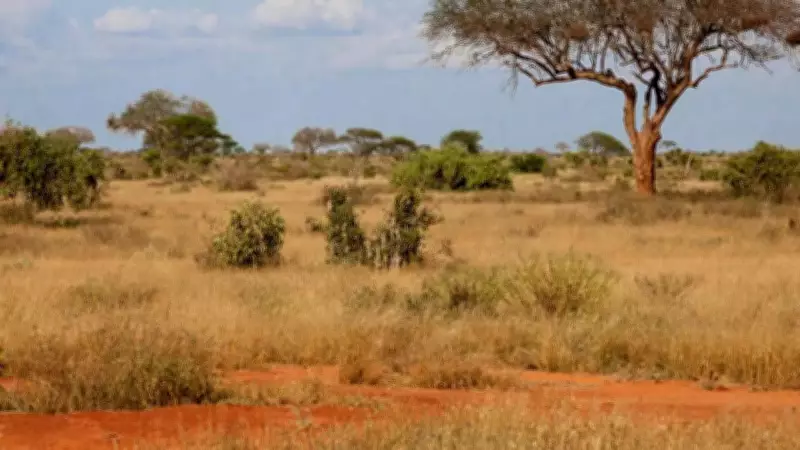
Rather than portraying dense, closed-canopy forests, these historical sources consistently depict open terrain characterized by thorny trees and grass-rich landscapes that were actively used for grazing livestock. These descriptions remarkably align with the features observed in present-day savannas, suggesting a continuity that spans centuries.

What makes this research particularly significant is that many of these historical sources have not been digitized and have rarely been examined by scientists, making them an overlooked but valuable archive of environmental information that provides crucial insights into India's ecological history.
Methodology and Key Findings
The research was recently published in People and Nature, a peer-reviewed journal of the British Ecological Society. Instead of relying exclusively on modern ecological surveys and contemporary observations, the research team adopted an innovative approach that combined ecology with history and archaeology.
Researchers analyzed a diverse range of Sanskrit, Marathi, and early vernacular texts, including poetic works, courtly writings, travel accounts, and regional chronicles. Many of these literary works contain remarkably detailed descriptions of seasonal changes, plant species, grazing lands, and daily life activities that provide valuable ecological context.
From these historical sources, the research team successfully identified references to 44 distinct wild plant species. Nearly two-thirds of these documented species are characteristic of savanna and grassland ecosystems rather than forest environments, providing compelling evidence that challenges the degraded forest narrative.
"The take-home message for me is how remarkably little things have changed over centuries," Nerlekar commented. "It's truly remarkable that descriptions written hundreds of years ago so closely match what we observe in these landscapes today."
Historical Context and Policy Implications
During the 20th century, large grassland areas across India were officially classified as "wastelands" in government records and policy documents. These landscapes were frequently treated as deforested regions that required extensive tree-planting initiatives to restore them to their presumed original forest state. This conceptual framework significantly shaped conservation approaches and climate policies throughout India, encouraging widespread afforestation efforts across these ecosystems.
The historical texts examined in this research present a fundamentally different narrative. They clearly demonstrate that these savanna ecosystems were already widespread and well-established at least 750 years ago, long before modern deforestation pressures emerged. This crucial finding indicates that these landscapes are not failed or degraded forests but rather distinct ecosystems that have evolved over extended periods through complex interactions between climate patterns, fire regimes, and grazing activities.
Additional scientific evidence further supports this revised understanding. Fossil pollen records extracted from the region consistently show grasses dominating the landscape for thousands of years. Similarly, archaeological remains of grass-eating animals provide additional confirmation of the long-term presence and stability of these open ecosystems.

Conservation Implications and Ecological Significance
When considered together, these findings strongly suggest that western India's savannas represent ancient and stable landscapes rather than the result of recent human-induced degradation. Recognizing this accurate ecological history carries significant importance because treating natural grasslands as degraded forests can inadvertently harm the very ecosystems that conservation efforts aim to protect.
Misclassifying savannas as degraded forests can have serious ecological consequences. Tree planting initiatives in natural grassland ecosystems can reduce native biodiversity, disrupt delicate soil systems, and threaten numerous species specifically adapted to open environments. India's savanna ecosystems support more than 200 endemic plant species and provide essential livelihoods for millions of people who depend on these landscapes for grazing, agriculture, and other traditional practices.
"These areas are frequently misunderstood and mischaracterized," Nerlekar emphasized. "If we continue to manage them as damaged forests requiring restoration through tree planting, we risk losing unique ecosystems that have existed and thrived for centuries."
The researchers strongly argue that recognizing the true ecological history of India's savannas is essential for designing effective conservation strategies and climate policies that genuinely protect rather than inadvertently erase some of India's oldest and most distinctive landscapes.