The undersea domain has become one of the most fiercely contested arenas of modern warfare. Stealthy, heavily armed and capable of remaining submerged for extended periods, submarines pose one of the biggest threats to surface fleets. For India, the challenge is growing rapidly. Pakistan has inducted the first of eight Chinese-built submarines, while China's People's Liberation Army Navy operates more than 60 submarines, according to the Observer Research Foundation (ORF).
Operational Necessity for ASW Helicopters
Against this backdrop, expanding the Indian Navy's anti-submarine warfare (ASW) helicopter fleet is no longer optional; it is an operational necessity. Naval helicopters are the fleet's primary submarine hunters. Equipped with dipping sonars, sonobuoys, magnetic anomaly detectors and lightweight torpedoes, they dramatically extend a warship's ability to detect, track and neutralise underwater threats. Without adequate helicopter support, even the Navy's most advanced destroyers and frigates are vulnerable to submarines operating beyond the reach of their onboard sensors.
Current Fleet and Capability Gaps
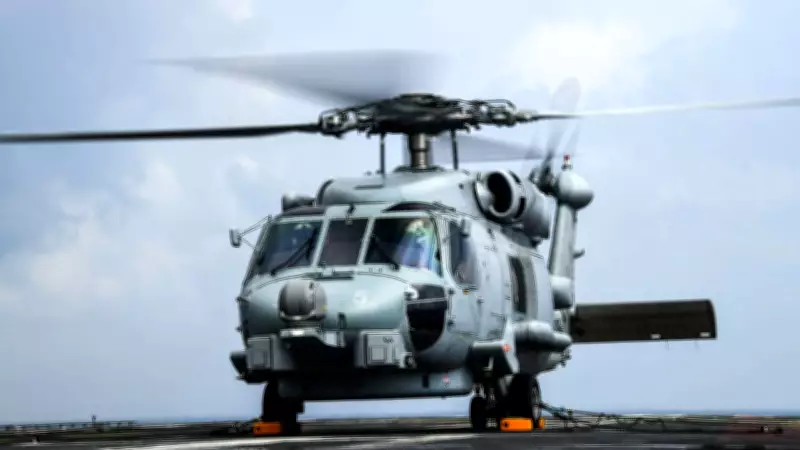
The Indian Navy has inducted 21 MH-60R Seahawk helicopters out of the 24 ordered from the United States. While the acquisition has significantly strengthened the Navy's ASW capability, the numbers remain inadequate for a force responsible for securing a vast maritime expanse stretching from the Bab el-Mandab in the west to the Strait of Malacca in the east. India's naval modernisation has made steady progress, but helicopter induction has not kept pace with the expanding fleet. The Navy needs to fast-track the Naval Multi-Role Helicopter (NMRH) and Naval Utility Helicopter (NUH) programmes to ensure that every frontline warship sails with an integral airborne ASW capability.

Growing Underwater Threats
The importance of underwater warfare has only grown in recent years. Modern submarines can disrupt sea lines of communication, threaten aircraft carrier groups and impose significant strategic costs without ever revealing their position. Recent incidents involving submarine operations in the wider Indian Ocean region have reinforced how quickly underwater threats can alter the maritime security environment. Although India has cleared the procurement of additional P-8I long-range maritime patrol and anti-submarine warfare aircraft through the Acceptance of Necessity (AoN) process, those aircraft will take several years to enter service. Naval helicopters can fill this capability gap immediately by providing persistent, ship-based ASW coverage.
Strategic Recommendations
By accelerating helicopter procurement, encouraging indigenous manufacturing and integrating these aircraft across the fleet, India can close one of its most critical capability gaps. As submarine numbers rise across the Indo-Pacific, the Navy's ability to dominate the undersea battlespace will increasingly depend not only on the ships it builds, but also on the helicopters that fly from them.
About the Author: The TOI News Desk comprises a dedicated and tireless team of journalists who operate around the clock to deliver the most current and comprehensive news and updates to the readers of The Times of India worldwide. With an unwavering commitment to excellence in journalism, our team is at the forefront of gathering, verifying, and presenting breaking news, in-depth analysis, and insightful reports on a wide range of topics. The TOI News Desk is your trusted source for staying informed and connected to the ever-evolving global landscape, ensuring that our readers are equipped with the latest developments that matter most.