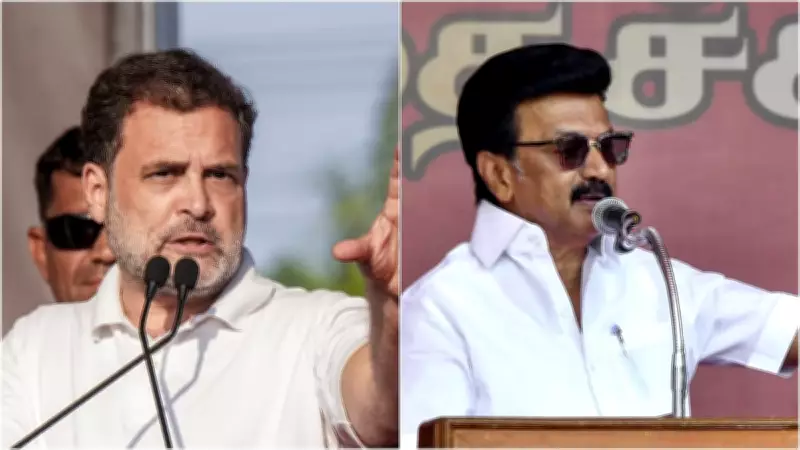
In a strategic political move, Congress leader Rahul Gandhi utilized Tamil Nadu Chief Minister M.K. Stalin's birthday greeting to reinforce ties with the Dravida Munnetra Kazhagam (DMK). Stalin's wish was concise and straightforward, merely expressing hopes for a long life for Rahul Gandhi. However, the Congress leader's reply was notably longer and deliberately steered the conversation toward their mutual objective of safeguarding the Constitution.
Exchange of Pleasantries with Political Undertones
The interaction between the two leaders, though seemingly routine, carried significant political weight. Stalin's brief message focused solely on personal well-being, while Rahul Gandhi's response expanded the dialogue to include broader ideological commonalities. By referencing their shared interest in protecting the Constitution, Gandhi subtly reinforced the alliance between Congress and DMK, which is crucial for opposition unity ahead of future elections.
Strategic Outreach Ahead of Polls
Political analysts view this exchange as a calculated effort by Rahul Gandhi to strengthen the Congress-DMK partnership. With general elections on the horizon, both parties are keen to present a united front against the ruling Bharatiya Janata Party (BJP). Gandhi's emphasis on constitutional values resonates with DMK's core principles, which advocate for social justice and federalism. This gesture is likely to be well-received by DMK cadres and could pave the way for deeper collaboration.

Context of Tamil Nadu Politics
The DMK, led by M.K. Stalin, has been a key ally of the Congress in Tamil Nadu. The party has historically championed secularism and regional autonomy, aligning with Congress's national stance. Rahul Gandhi's outreach comes at a time when the opposition is seeking to consolidate its ranks. By invoking the Constitution, Gandhi taps into a shared narrative that appeals to voters concerned about democratic institutions.
This episode also highlights the personal rapport between the two leaders, which could facilitate smoother coordination in the future. As the political landscape evolves, such gestures are likely to become more frequent, signaling a concerted effort to build a robust opposition alliance.