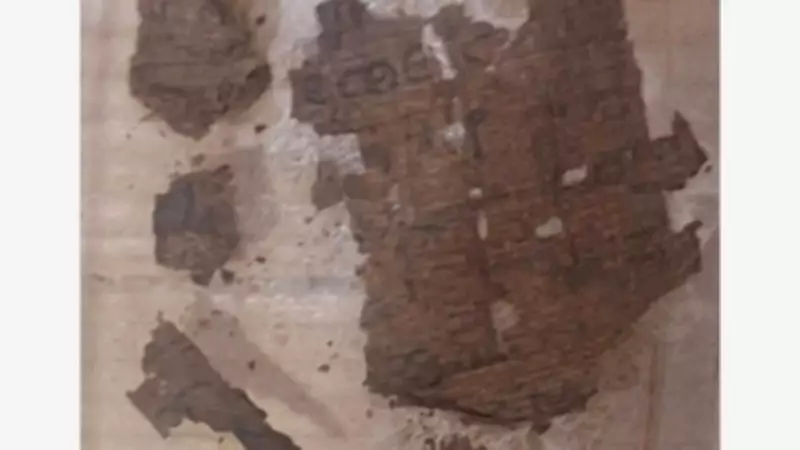
A Roman-era burial site in Egypt has yielded a surprising archaeological find: a fragment of Homer's Iliad was discovered inside a mummy dating back roughly 1,600 years. The site is located in Al Bahnasa, ancient Oxyrhynchus, about 190 kilometres south of Cairo.
The papyrus was not placed outside the body or among burial goods. It was positioned inside the abdomen during mummification. The Oxyrhynchus Archaeological Mission, led by teams from the University of Barcelona, discovered it during fieldwork in late 2025. The fragment is linked to Book II of the Iliad, specifically the Catalogue of Ships section, which lists Greek forces assembled for the Trojan War. The placement of a literary text in a funerary setting is unusual for this period.
Homer's Iliad Fragment Identification and Unexpected Burial Context
The University of Barcelona reveals that the fragment was identified as part of Homer's epic after careful analysis. The reading was confirmed by papyrologists working on-site in early 2026. The Catalogue of Ships is one of the most recognisable parts of the Iliad. It describes Greek leaders and regions contributing troops and is often studied in classical literature courses today. Professor Ignasi-Xavier Adiego, part of the research team, noted that Greek papyri have been found in burials before, but those usually contain magical or ritual texts, such as protective spells. A literary epic is something different.

Inside the Oxyrhynchus Burial Site in Egypt
The discovery was made in Tomb 65, within Sector 22 of the necropolis. The burial complex includes limestone chambers and Roman-era mummies, with some wooden sarcophagi also present. Many remains show damage linked to ancient looting. The papyrus was placed directly on the abdomen of the mummy. It appears to have been inserted during the embalming process rather than added later. That positioning suggests intention, though the exact purpose is not clear.
Oxyrhynchus itself is one of the most significant archaeological sites in Egypt. Thousands of papyri have been recovered there since the late 19th century. Many are administrative records or everyday documents, while others are literary works that have helped shape the understanding of the ancient Greek world.
Oxyrhynchus Archaeological Mission's Long History of Discoveries
The Oxyrhynchus Archaeological Mission has been active since 1992. Over time, it has built a strong record of papyrus discoveries. Most finds follow familiar patterns, especially religious or administrative texts. This fragment does not fit those categories easily. Researchers say the discovery raises questions about how ancient communities viewed classical literature. It is possible that the text held symbolic value, perhaps associated with identity, learning, or status. Some experts suggest it could have been reused material, though its deliberate placement makes that less certain.
There is also the wider context of cultural mixing in Roman Egypt. Greek and Egyptian traditions often overlapped during this period. Burial customs sometimes reflected that blend. Still, a Homeric text placed inside a mummy remains unusual.
Ongoing Study and Preservation at Oxyrhynchus
The fragment does not rewrite what is known about Homer or Roman Egypt. It shows how texts from classical literature may have travelled beyond reading and teaching contexts into ritual or symbolic spaces. For now, the papyrus remains under study. Conservation and analysis continue. The discovery adds another piece to the long history of Oxyrhynchus, a site already known for its extraordinary preservation of ancient writings.