Scientists Solve Deep-Sea Mystery of Earth's Richest Gold Deposits
A groundbreaking study has unraveled a long-standing geological enigma, pinpointing the precise mechanisms that generate Earth's most abundant gold deposits in the remote depths of the South Pacific. Led by Dr. Christian Timm, a marine geologist at the GEOMAR Helmholtz Centre for Ocean Research Kiel, the research team has identified how volcanic island arcs function as natural 'gold factories,' concentrating precious metals through complex processes deep beneath the ocean floor.
The 'Gold Factory' Beneath the Kermadec Islands
Published in the journal Communications Earth & Environment, the study demonstrates that volcanic arcs, such as the Kermadec Islands near New Zealand, are not merely geological formations but active sites for gold enrichment. The research conclusively shows that the accumulation of gold in these deposits is not a random occurrence but results from a meticulously orchestrated series of events involving the repeated melting of Earth's mantle.
The key finding is that gold is distilled from the mantle and concentrated in magma through multiple stages before it reaches the seafloor. This process is significantly aided by water released from subducting tectonic plates, which acts as a flux to enhance gold enrichment in the magma. According to related research in Nature, gold can only be enriched under 'hydrous' or water-rich conditions, requiring numerous melting cycles to achieve high concentrations.

Mechanisms of Gold Enrichment Explained
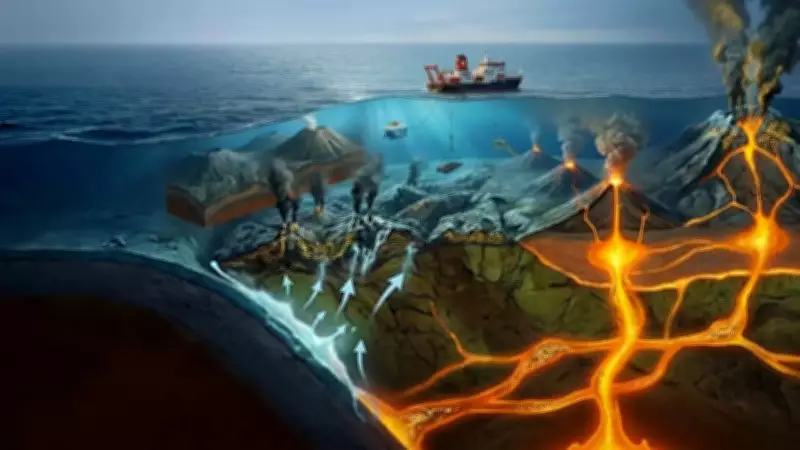
When an oceanic plate, like the Pacific Ocean Plate, is subducted beneath another plate, such as the Australian Plate, fluids are forced out of the descending slab and escape into the mantle. As these fluids infiltrate the mantle, they lower the solidus, or melting point, of the mantle material, triggering progressive melting. However, it is only after multiple cycles of this melting that the mantle can chemically concentrate 'chalcophile' elements—those that associate with sulphur, like gold and copper—into the final magma product.
To characterize these processes, the team examined 66 samples of deep-sea volcanic glass collected from the ocean floor. Unlike crystalline rocks that form slowly, volcanic glass results from the instantaneous freezing of lava upon rapid cooling in cold seawater. These 'primitive' glass samples contained higher gold levels than typically found at mid-ocean ridges, indicating that enrichment occurred through repeated melting cycles in the deep mantle's 'plumbing' system before the magma erupted at volcanoes.
Implications for Seafloor Resource Exploration
This research has led to a re-evaluation of the Kermadec arc, previously viewed as an isolated geological entity. It is now recognized as a significant source region for major, previously unrecognized geochemical and mineral resources, including gold. This new understanding provides a blueprint for locating important massive seafloor sulfide deposits, which are often associated with precious metals.
The findings are critically important for developing a global perspective on how and where noble metals exist on Earth. They offer insights into the entire 'life cycle' of gold, from its origins in deep mantle processes to its deposition as solid ore at hydrothermal vent sites, influenced by slab-derived fluids. This advancement could guide future exploration efforts for underwater mineral resources, potentially unlocking new avenues for sustainable mining in deep-sea environments.