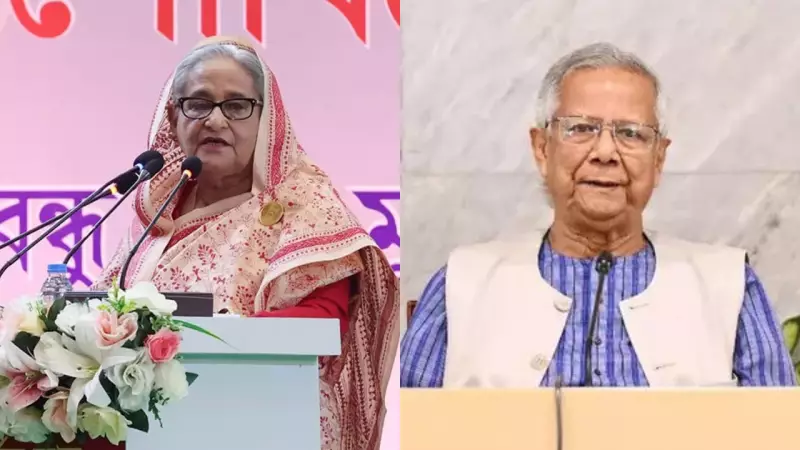
In a scathing New Year's message, former Bangladesh Prime Minister Sheikh Hasina launched a fierce attack on the current interim government led by Nobel laureate Muhammad Yunus. Hasina, who was ousted from power following widespread protests in 2024, accused the administration of plunging the nation into "darkness" through limitless corruption and serving personal interests.
A Nation Pushed Towards Darkness: Hasina's Grave Accusations
Sheikh Hasina, in a statement posted on the banned X account of her Awami League party, directly addressed the citizens of Bangladesh. She claimed that the true faces of conspirators aiming to destroy the country have been revealed. "Illegal usurpers," she stated, have taken the people hostage and are driving the nation towards ruin. Her message comes at a tense time, following the death of radical leader Sharif Osman Hadi, which triggered vandalism of important institutions and targeted attacks on minority communities, especially Hindus.
Hasina painted a grim picture of the current state of the nation, asserting that Bangladesh is now associated with fear and has lost the respect of the international community. She directly linked the political and security chaos to an economic collapse, citing insecurity among foreign investors and donor groups as a primary cause. Her call to action was clear: citizens must unite across class, religion, and ethnicity to save the country and protect its distinct identity and liberation legacy, which she claims her government worked tirelessly to uphold.

Awami League Details Rising Extremism Against Minorities
Echoing and expanding on Hasina's warnings, the Awami League issued a separate, detailed post on X. The party highlighted the deteriorating security situation for minority communities under the Yunus administration. It stated that since Muhammad Yunus took charge in 2024, there has been a sharp rise in Islamist extremism.
The post specifically detailed the plight of Bangladesh's Christian community, whose lives it claims have been "turned upside down." In the volatile period leading up to both Christmas and the elections, extremist groups openly labeled Christians as 'enemies of Islam'. This rhetoric was accompanied by direct action, with threat letters being sent to churches, schools, and missionary institutions, creating an atmosphere of pervasive fear.
Broader Implications for Bangladesh's Future
The combined statements from Sheikh Hasina and her party present a unified narrative of a nation in crisis. They accuse the interim government of fostering an environment where corruption thrives and extremist elements are "emboldened" to target political and religious minorities. The Awami League emphasized that despite decades of peaceful coexistence, minority groups are now being branded as "political enemies."
With the Awami League itself banned from political activities and contesting elections, these messages serve as a powerful political critique from outside the formal power structure. They frame the current leadership as illegitimate and destructive, while calling for a national renewal based on unity and the protection of Bangladesh's foundational secular and democratic principles. The economic consequences of this instability, as highlighted by Hasina, add a critical dimension to the ongoing political struggle.