Seoul Court Convicts Former South Korean First Lady on Corruption Charges
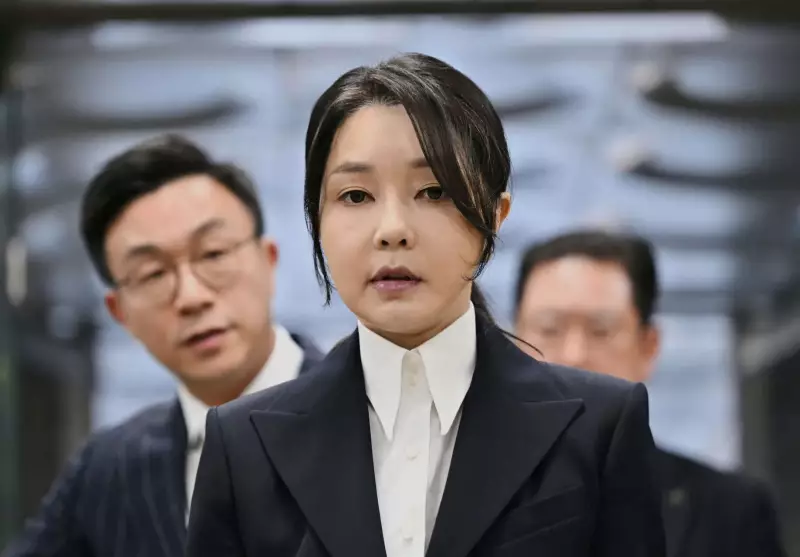
A court in Seoul has delivered a significant verdict in a high-profile corruption case, convicting South Korea's former first lady, Kim Keon Hee, and sentencing her to 20 months in prison. The ruling, handed down on Wednesday, found Kim guilty of corruption charges while clearing her of allegations related to stock manipulation and other offences.
Details of the Conviction and Acquittal
Judge Woo In-sung of the Seoul Central District Court found Kim Keon Hee guilty on corruption charges, imposing a prison sentence of 20 months. Simultaneously, the court acquitted her of allegations concerning stock manipulation and breaches of election funding rules. This mixed verdict highlights the complex nature of the legal proceedings against the former first lady.
The prosecution had accused Kim of accepting expensive bribes worth more than $200,000 from various business figures and politicians. These alleged bribes reportedly included luxury items such as two Chanel handbags and a Graff necklace, which were said to have been given by the leader of the Unification Church.

Background of Allegations and Political Context
In recent years, during the presidency of her husband Yoon Suk Yeol, the 53-year-old Kim has faced repeated allegations of corruption, influence peddling, and academic fraud. Both Kim and Yoon are now behind bars—Yoon for his declaration of martial law in December 2024 and the subsequent turmoil, and Kim for allegations related to financial wrongdoing and accepting gifts from the Unification Church.
Prosecutors argued that Kim had "stood above the law" and collaborated with the Unification Church in ways that eroded "the constitutionally mandated separation of religion and state." Prosecutor Min Joong-ki stated that the country's institutions had been "severely undermined by abuses of power" attributed to the former first lady.
Kim's Response and Apology
Kim Keon Hee has consistently rejected all accusations against her. In her final testimony last month, she described the allegations as "deeply unjust." However, she also offered an apology, expressing regret for "causing trouble despite being a person of no importance." She acknowledged in December that, considering her role and responsibilities, she had "made many mistakes."
The Dior Bag Scandal and Political Fallout
In 2023, secretly filmed footage appeared to show Kim accepting a $2,200 luxury handbag, an episode that became widely known as the "Dior bag scandal." This controversy significantly weakened Yoon Suk Yeol's approval ratings and contributed to his party's defeat in the April 2024 general elections, where it failed to regain a parliamentary majority.
Yoon later vetoed three opposition-backed bills that sought probes into allegations against Kim, including the Dior bag case, with his final veto issued in November 2024. One week after this veto, he declared martial law, further escalating the political crisis.
Broader Legal and Political Implications
Kim's sentencing occurs just days after former Prime Minister Han Duck-soo received a 23-year jail term—eight years longer than prosecutors had sought—for aiding and abetting Yoon's suspension of civilian rule. This series of convictions underscores the ongoing legal reckoning within South Korea's political elite.
The investigation into Kim also led to the arrest of Han Hak-ja, the head of the Unification Church, which claims a global following of 10 million people and controls an extensive business empire. Additionally, a Seoul court is expected to pass sentence on senior lawmaker Kweon Seong-dong, who has been accused of accepting bribes from the same religious group.
These developments highlight the intricate connections between political figures, religious organizations, and allegations of corruption in South Korea, marking a turbulent period in the nation's governance and legal landscape.