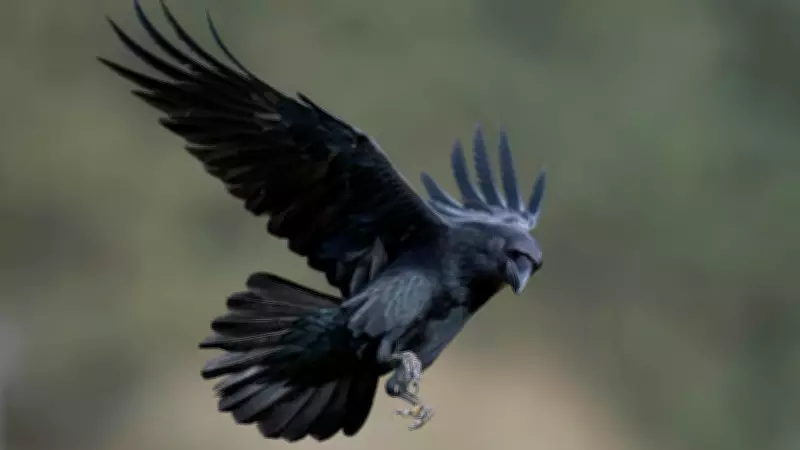
Ravens inhabiting the unique environment of the Dead Sea have evolved remarkable adaptations that allow them to thrive in conditions where few animals can survive. These intelligent birds, known as brown-necked ravens (Corvus ruficollis), have successfully adapted to the hot desert-like environment around the shores of the Dead Sea by consuming whatever food is available.
Dead Sea's Extreme Conditions: How Ravens Survive Without Freshwater
The Dead Sea, located between Jordan and Israel, is one of the saltiest bodies of water in the world. Its extremely high salinity prevents any life from existing in the water itself. However, the cliffs and rocky surroundings create a peculiar habitat for specific animal species, including ravens. According to a study titled "The Raven and the Sea: The Lost Intertidal World of Eighteenth-Century Ornithology," Corvus ruficollis is perfectly adapted to the desert climate. These birds obtain moisture from their prey, enabling them to survive for extended periods without drinking freshwater.
Feeding Habits and Behavioural Intelligence of Dead Sea Ravens
Ravens living near the Dead Sea rely heavily on their intelligence and flexibility. By nature, they are scavengers that consume dead animal matter, insects, smaller reptiles, and even leftover food from humans. Their intelligence allows them to locate resources that other creatures might miss. A behavioural paper titled 'Why are Ravens Smart? Exploring the Social Intelligence Hypothesis' reveals that ravens exhibit extremely high levels of intellect, capable of planning and using tools. The study found that "ravens are able to solve complex problems and modify their feeding tactics in response to environmental factors."

Nesting Strategies in Extreme Desert Cliffs
Another remarkable characteristic of Dead Sea ravens is their nesting behaviour. Their nests are typically located on the edges of precipitous cliffs, offering protection from predators and harsh weather conditions, including high ground-level temperatures. Field observations cited by the Department of Bioscience and Bioengineering at the Indian Institute of Technology Jodhpur indicate that desert ravens tend to build nests in isolated locations to minimize competition. The department notes: "Nesting on cliffs is essential for survival due to food scarcity." Additionally, the cliffs around the Dead Sea create an ecosystem with relatively lower temperatures, further aiding their survival.
Why These Ravens Matter in Desert Biodiversity
Although often seen as isolated scavengers, ravens play a crucial ecological role by consuming carrion, which helps prevent the spread of diseases and facilitates nutrient recycling within the desert ecosystem. Their very existence in such inhospitable surroundings is a testament to the tenacity of life. The raven is considered an indicator species because its adaptability serves as a gauge of overall environmental suitability. The corvid family generally thrives in varied habitats, making them valuable for providing insights into ecosystem health. Where no life exists in the water, these fearless ravens demonstrate the strength and adaptability of nature.