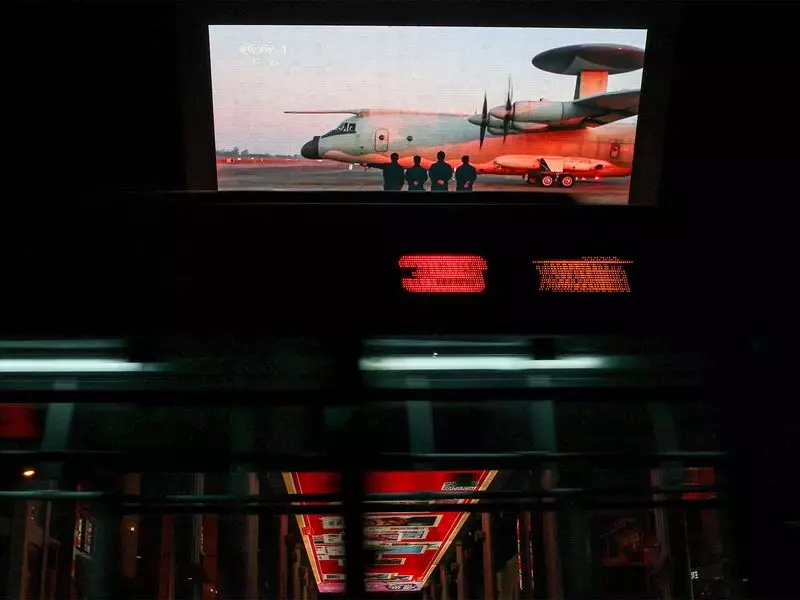
The People's Liberation Army (PLA) of China has officially concluded its large-scale military exercises, codenamed 'Joint Sword-2025A,' which took place around Taiwan. The drills, which lasted for two days, were a significant display of force in the region.
Details of the Military Manoeuvres
The Eastern Theater Command of the PLA conducted the exercises, which it described as a joint sea-air combat readiness patrol. The operations were framed as a necessary response to what Beijing terms the 'separatist acts' of Taiwan's independence forces. The drills involved forces from the army, navy, air force, and rocket branch, simulating a comprehensive encirclement of the island.
According to official statements, the exercises focused on key areas including joint seizure of battlefield control, precision strikes on high-value targets, and integrated operations. The maneuvers were carried out in the Taiwan Strait as well as to the north, south, and east of Taiwan, effectively surrounding the island. This action follows the political inauguration in Taipei that Beijing strongly opposes.
Regional Reactions and Strategic Implications
The timing and scale of 'Joint Sword-2025A' have drawn intense scrutiny from the international community. The drills are seen as a direct message to Taiwan's new administration and its external supporters, particularly the United States. Such military activities significantly increase the risk of miscalculation and accidental conflict in one of the world's most critical shipping lanes.
While China maintains that the exercises are defensive and a legitimate right to protect national sovereignty, regional powers view them as aggressive posturing that destabilizes the status quo. The PLA stated that its troops remain on high alert, ready to resolutely crush any form of 'Taiwan independence' separatist schemes and firmly safeguard national sovereignty and territorial integrity.
What Comes Next?
The conclusion of these drills does not signal an end to tension. Analysts suggest that the PLA has demonstrated enhanced capabilities for a potential blockade or other coercive actions against Taiwan. The event underscores the persistent and volatile nature of cross-strait relations, where political developments can quickly trigger military demonstrations.
For the Indo-Pacific region, including India, these developments highlight the ongoing geopolitical friction between major powers. The situation demands careful diplomatic navigation to ensure stability and peace. The world will be watching closely to see if this de-escalation holds or if further provocations lead to another cycle of military exercises.