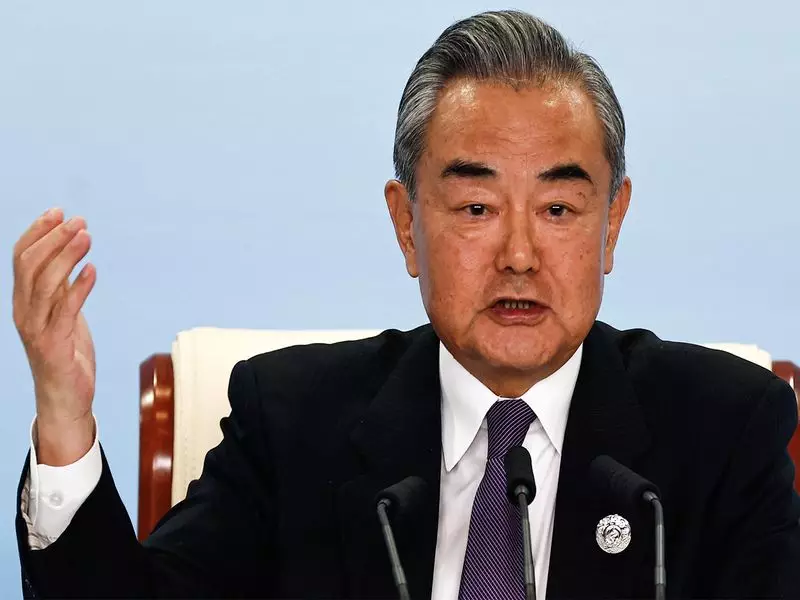
Chinese Foreign Minister Wang Yi has delivered a strong message to Japan during high-level diplomatic talks, urging Tokyo to address several critical concerns that have strained bilateral relations between the two Asian powers. The meeting between Wang and his Japanese counterpart Yoko Kamikawa occurred amid growing tensions over multiple issues.
Key Diplomatic Discussions
The foreign ministers of China and Japan engaged in crucial discussions that highlighted several points of contention between the two nations. Wang Yi explicitly asked Japan to "correct its mistakes" regarding specific actions that Beijing views as problematic. The talks represented an important opportunity for both countries to address their differences directly through diplomatic channels.
During the conversation, Wang emphasized that China-Japan relations currently stand at a critical juncture, requiring careful handling and mutual respect. The Chinese diplomat stressed the importance of building a relationship that aligns with the requirements of the new era, suggesting that both nations need to work toward constructive engagement despite their differences.
Major Points of Contention
Several specific issues emerged as central to the discussions between the two foreign ministers. The release of treated radioactive water from the Fukushima nuclear plant represented one of the most significant concerns raised by the Chinese side. Beijing has consistently expressed strong opposition to Japan's decision to discharge the water into the ocean, citing environmental and health concerns.
Another critical matter addressed during the talks involved Japan's position on Taiwan. Wang Yi reiterated China's firm stance on the Taiwan issue, emphasizing that it represents a red line that must not be crossed in bilateral relations. The Chinese minister called on Japan to adhere strictly to the One-China principle and to handle Taiwan-related matters with caution and respect for China's core interests.
The discussions also touched upon regional security concerns, with both ministers exchanging views on maintaining stability in the Asia-Pacific region. While the conversation remained diplomatic in tone, the underlying tensions were evident throughout the engagement.
Regional Implications and Future Prospects
The outcome of these high-level talks carries significant implications for regional dynamics in Asia. As two of the region's largest economies and most influential powers, the state of China-Japan relations affects not only bilateral trade and cooperation but also broader geopolitical stability.
Despite the firm positions taken by both sides, the very fact that the foreign ministers engaged in direct dialogue suggests that neither country wishes to see relations deteriorate further. The discussions provided an opportunity to clarify respective positions and potentially identify areas where mutual understanding could be improved.
Looking ahead, the relationship between China and Japan will likely continue to navigate complex challenges while seeking opportunities for practical cooperation. Both nations recognize the importance of maintaining communication channels open, even when disagreements persist on sensitive issues.
The international community, particularly other Asian nations, will be watching closely how these diplomatic efforts unfold, as the China-Japan relationship serves as a crucial barometer for regional cooperation and competition in the evolving Asian landscape.