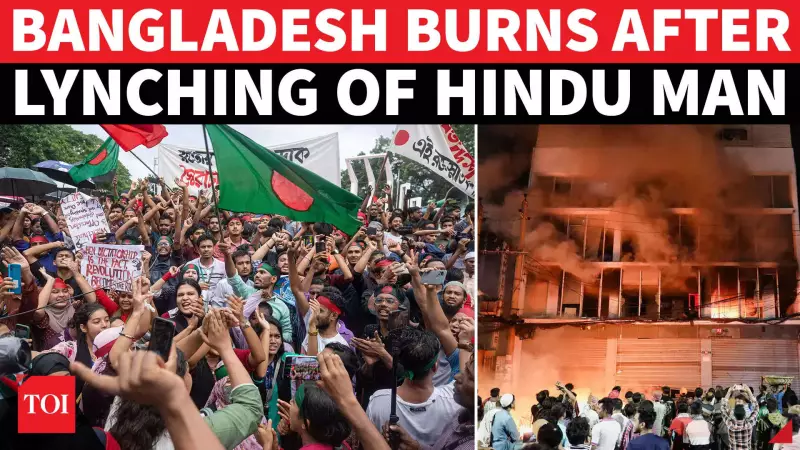
Bangladesh has been plunged into a state of severe turmoil and widespread protests following the reported death of a key uprising leader. The situation escalated rapidly, with violence breaking out on the streets of the capital, Dhaka, and spreading to several other cities across the nation.
Nationwide Unrest and Targeted Violence
The catalyst for the current crisis is the death of Osman Hadi, identified as a leader of a significant uprising. His demise has acted as a flashpoint, igniting long-simmering tensions. Protesters have taken to the streets in massive numbers, leading to chaotic and often violent confrontations.
Reports confirm that the unrest is not confined to Dhaka alone but has affected multiple urban centers. In a worrying development, demonstrators have specifically targeted media houses, political party offices, and various diplomatic sites. This indicates a direct challenge to institutions of information, governance, and international relations.
Rising Anti-India Sentiment and Political Context
A particularly concerning aspect of the protests has been the noticeable intensification of anti-India slogans and demonstrations. These sentiments have grown more pronounced overnight, adding a complex geopolitical dimension to the domestic unrest. The reasons behind this specific targeting are multifaceted, often rooted in local political narratives and perceptions.
This explosive situation unfolds at a critically sensitive time for Bangladesh, as the country prepares for its general elections scheduled for February 2026. The political atmosphere was already charged, and the current violence threatens to destabilize the electoral process further. Analysts suggest that the protests are deeply intertwined with the high-stakes political maneuvering ahead of the polls.
Implications and the Path Forward
The declaration of 'No Mercy' from certain quarters underscores the hardened stance of the protesters and points to the potential for prolonged instability. The government faces a formidable challenge in restoring order while addressing the underlying grievances that fuel the protests.
The targeting of diplomatic premises raises serious concerns about international relations and security for foreign missions. The coming days will be crucial in determining whether the situation de-escalates or spirals into a deeper crisis, with significant implications for Bangladesh's democracy, economy, and social harmony just months before a pivotal national vote.