Cosmic Light Shows: Auroras Across the Solar System
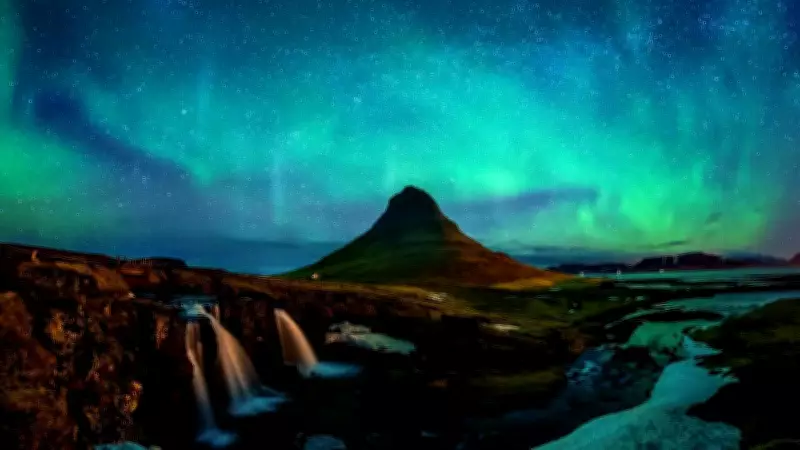
When we gaze at the night sky and witness the mesmerizing dance of the aurora borealis, with its vibrant green, purple, and red hues painting the polar heavens, it's easy to assume this spectacle is unique to our planet. However, Earth is merely one stage in a grand cosmic theater of luminous displays. Across our solar system, several planets host their own auroras, born from the intense interplay between charged particles and atmospheric environments. These extraterrestrial light shows, while often invisible to the naked eye, are detectable through advanced instruments like NASA's Hubble Space Telescope, offering a glimpse into the dynamic processes shaping our celestial neighbors.
Auroras on Earth: The Northern and Southern Lights
The aurora borealis, or northern lights, and its southern counterpart, the aurora australis, occur when solar wind particles from the Sun travel along Earth's magnetic field lines toward the poles. There, they collide with atoms in the upper atmosphere, resulting in the emission of characteristic green and red lights that have inspired awe for centuries. This phenomenon serves as a baseline for understanding similar events on other worlds.
Jupiter's Intense Auroral Displays
Jupiter boasts its own version of auroras, which are far more intense than those on Earth. NASA's Hubble Space Telescope has captured stunning images of severe, oval-shaped auroras at Jupiter's poles, driven by charged particles interacting with the planet's massive magnetic field. This magnetic field is significantly stronger than Earth's, leading to more powerful and expansive light shows that highlight the gas giant's dynamic nature.

Saturn's Polar Auroras
Saturn also experiences remarkable auroral displays at both poles. Similar to Earth and Jupiter, these auroras form when solar wind particles engage with Saturn's magnetic field and atmosphere. Their intensity and form vary with solar activity, creating a constantly changing spectacle that underscores the influence of the Sun on planetary environments.
Uranus's Unique Auroral Phenomena
The auroras on Uranus present a unique challenge for detection due to the planet's unusually tilted magnetic field. NASA has captured evidence of auroral emissions in ultraviolet light on Uranus, revealing that even this distant ice giant glows with auroral activity when solar particles interact with its magnetic field. This discovery expands our understanding of how magnetic orientations affect these cosmic light shows.
Neptune's Mid-Latitude Auroras
Neptune has been confirmed to host auroras, with observations detailing their presence after decades of suspicion. Interestingly, due to Neptune's tilted magnetic field, these lights appear at mid-latitudes rather than the poles, broadening our perspective on where auroras can occur and challenging previous assumptions about their formation.
Mars's Auroras Without a Global Magnetic Field
Mars lacks a global magnetic field like Earth's, yet it still experiences auroras. NASA's rovers have captured these glows in visible light, resulting from high-energy solar particles interacting with the Martian atmosphere during solar storms. These observations provide crucial insights into how solar wind influences Mars's thin atmosphere and its potential for atmospheric loss.
Venus's Widespread Auroral Emissions
Venus, devoid of a protective global magnetic field, exhibits auroras that arise from direct collisions between solar wind particles and its dense atmosphere. These interactions excite gases such as oxygen and carbon dioxide, producing faint ultraviolet emissions that blanket the entire surface. Unlike Earth's polar-focused displays, Venus's auroras are global and require space-based imaging systems for detection, highlighting the diversity of auroral mechanisms.

Scientific Insights from Planetary Auroras
Aurora events serve as natural laboratories in space, offering scientists valuable data on atmospheric loss, magnetic field properties, and solar wind dynamics across the solar system. By studying these phenomena, researchers gain insights that are essential for preparing future space explorations and understanding the broader cosmic environment. This knowledge not only enriches our comprehension of planetary science but also aids in safeguarding missions to other worlds.
About the Author
The TOI Science Desk is a dedicated team of journalists passionate about exploring the wonders of science. From genetic engineering to space exploration and artificial intelligence, we strive to make complex scientific narratives accessible and engaging for readers of all backgrounds. Join us as we unravel the mysteries of the universe, one story at a time.