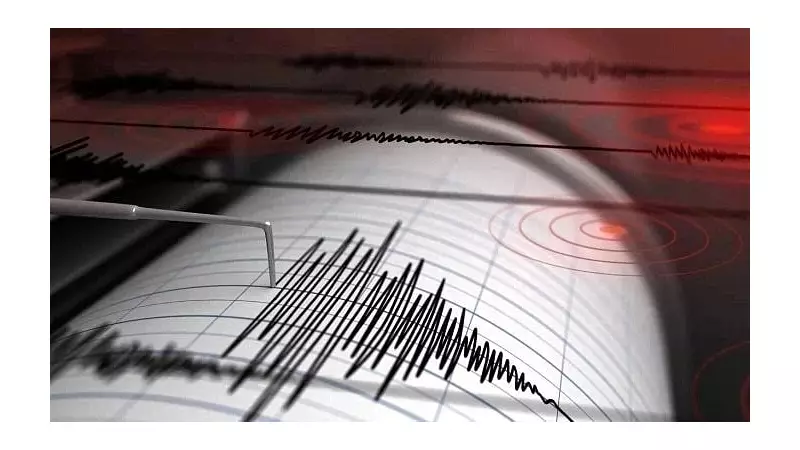
A moderate earthquake with a magnitude of 5.1 struck the northeastern state of Assam on Friday, sending tremors across the region but causing no reported damage or loss of life.
Details of the Seismic Event
The quake's epicentre was located in the Sonitpur district of Assam, according to data released by the National Center for Seismology (NCS). The seismic event occurred at 7:49 am on Friday, May 31. The NCS provided precise coordinates, placing the epicentre at a latitude of 26.67 degrees north and a longitude of 92.36 degrees east. The earthquake originated at a shallow depth of 10 kilometres below the earth's surface.
Residents in Sonitpur and surrounding areas, including the state's largest city Guwahati, reported feeling strong tremors that lasted for several seconds. The shaking was also perceptible in other parts of the Northeast, causing momentary alarm among the populace.

Official Response and Immediate Aftermath
Following the quake, local authorities and disaster management teams swiftly initiated assessments to check for any potential impact. Preliminary reports from the district administration confirmed that no casualties or damage to property have been reported so far.
Officials stated that the situation is being closely monitored. Teams are on standby to respond to any emergent needs, although the initial feedback from the ground has been reassuring. The absence of significant damage is attributed to the moderate magnitude of the quake and its specific epicentral location.
Geological Context and Preparedness
Assam and the broader Northeast Indian region are classified in Seismic Zone V, denoting the highest level of seismicity in the country. This zone is particularly prone to powerful earthquakes due to its complex tectonic setting, being at the confluence of the Indian and Eurasian tectonic plates.
The occurrence of Friday's tremor serves as a reminder of the persistent seismic risk in the area. It underscores the critical importance of:
- Robust infrastructure built to earthquake-resistant standards.
- Continuous public awareness campaigns on earthquake safety protocols.
- Effective early warning systems and disaster response mechanisms.
While today's event passed without major incident, it reinforces the need for constant vigilance and preparedness in one of India's most seismically active regions. Authorities have urged citizens to remain calm and stay informed through official channels.