

World's Longest Road Tunnels: Engineering Marvels That Took Decades to Build
Road infrastructure serves as a critical indicator of a nation's development and technological advancement. Across the globe, countries invest heavily in creating sophisticated road networks to enhance commuting efficiency and connectivity. Among these infrastructure projects, road tunnels stand out as remarkable engineering achievements, often requiring decades of planning and construction to navigate through mountains, underwater passages, and urban landscapes.
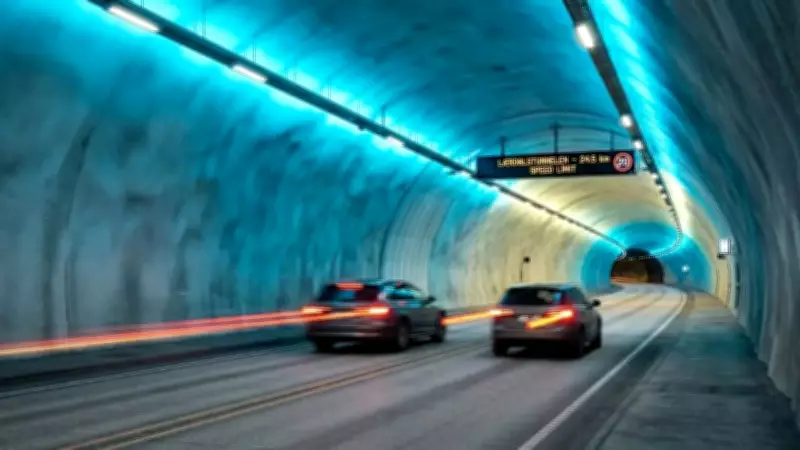
1. Lærdal Tunnel, Norway - 24.51 km
The Lærdal Tunnel holds the distinction of being the world's longest road tunnel, seamlessly connecting the towns of Lærdal and Aurland. This 20-minute passage through the Norwegian mountains incorporates innovative design elements to combat driver fatigue. Engineers installed four sections with three large mountain caves each, featuring blue and yellow lighting that mimics sunrise. This psychological design helps maintain driver alertness during the lengthy journey.
2. WestConnex, Australia - 22.0 km
Australia's most extensive road construction project, WestConnex, provides vital access to Sydney's motorway system through underground tunnels. The project utilizes advanced LED safety signs and comprehensive air quality monitoring systems. By allowing commuters to bypass hundreds of traffic signals, these tunnels significantly reduce travel times for tens of thousands of daily travelers in the greater Sydney metropolitan area.

3. Yamate Tunnel, Japan - 18.20 km
As the world's longest urban road tunnel, the Yamate Tunnel runs deep beneath central Tokyo as part of the Shuto Expressway. Construction required groundbreaking engineering to navigate existing subway lines and utility networks. The tunnel features large ventilation towers and automated fire suppression systems, ensuring safety for the high volume of urban road users.
4. Zhongnanshan Tunnel, China - 18.04 km
This two-bore tunnel beneath the Qinling Mountains has received international recognition for its psychological design elements. Engineers decorated sections with artificial plants, flowers, and decorative lighting that creates an impression of sky above. This innovative approach helps alleviate driver anxiety during the lengthy mountain passage.
5. Jinpingshan Tunnel, China - 17.54 km
An extraordinary example of deep mountain engineering, the Jinpingshan Tunnel features an unprecedented volume of rock above its deepest sections, with over 2,300 meters of rock coverage. Originally constructed as part of the Jinping Hydropower Project, this tunnel provides fast access between remote areas with challenging geological conditions along the Yalong River.
6. Gotthard Road Tunnel, Switzerland - 16.84 km
Built in 1980 through the Swiss Alps, the Gotthard Road Tunnel serves as a crucial connection between northern and southern Europe. This international roadway operates with a single barrel for bidirectional traffic, incorporating sophisticated ventilation systems that draw air from the sports dome above to maintain adequate airflow throughout the tunnel.
7. Tiantaishan Tunnel, China - 15.56 km
Located on the Baoji-Pingkan Expressway, the Tiantaishan Tunnel represents an ambitious mountain crossing through the Qinling Mountain Range. The project features six total lanes across two separate tunnels, utilizing modern mechanical tunnelling techniques to overcome challenging geological structures while maintaining high-speed safety standards for regional transportation.
8. Muzhailing Tunnel, China - 15.22 km
The Muzhailing Tunnel in Gansu Province established new standards for high-altitude engineering, addressing complex geological stress and geographic separation challenges. This engineering marvel finally connected previously isolated mountain communities, resolving one of China's most significant bottleneck situations within the national expressway system through environmentally sensitive terrain.

9. Zigana Tunnel, Turkiye - 14.48 km
Turkiye's longest road tunnel, the Zigana Tunnel, replaces the once-dangerous Zigana Pass through the eastern Pontic Mountains. This engineering achievement provides an all-weather route that significantly shortens transit between the Black Sea and Eastern Anatolia, establishing itself as a premier infrastructure project in the Middle East region.
10. Ryfylke Tunnel, Norway - 14.46 km
With a maximum depth of 292 meters below sea level, Norway's Ryfylke Tunnel holds the distinction of being the world's longest and deepest underwater road tunnel. Part of the new Solbakk-Stavanger route, this engineering feat replaced earlier ferry connections with fast underground travel. Engineers carefully accounted for significant underwater pressure while designing safe vehicle slopes throughout the tunnel.
Engineering Legacy and Global Impact
These ten remarkable tunnels represent decades of engineering innovation and construction effort. From Norway's psychological lighting systems to China's mountain-piercing passages and Australia's urban solutions, each project demonstrates how human ingenuity overcomes geographical barriers. These tunnels not only save travel time but also enhance safety, connect communities, and stimulate economic development across continents.
The construction of these tunnels involved overcoming numerous challenges:
- Geological obstacles: Navigating through mountains, underwater passages, and complex rock formations
- Safety considerations: Implementing advanced ventilation, fire suppression, and monitoring systems
- Psychological design: Creating environments that reduce driver fatigue and anxiety
- Environmental sensitivity: Balancing infrastructure needs with ecological preservation
As transportation needs continue to evolve globally, these engineering marvels serve as benchmarks for future infrastructure projects. They demonstrate how sustained investment in transportation infrastructure can transform regional connectivity, economic opportunities, and quality of life for millions of people worldwide.





