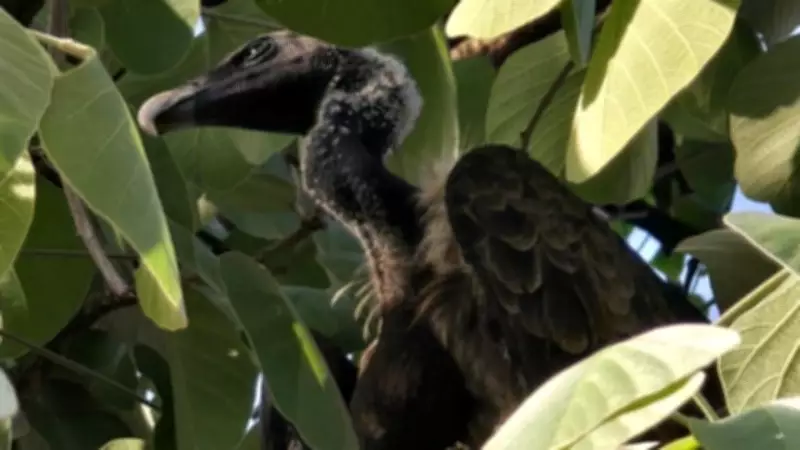
Two Indian vultures released in Maharashtra's Melghat Tiger Reserve (MTR) have flown over 1,000 kilometers, according to satellite tracking data. The birds were among fifteen vultures released in the reserve in January 2026 under the overall supervision of Dr. Kishor Rithe, Director of the Bombay Natural History Society (BNHS).
Tracking the Vultures' Journey
The two vultures, fitted with satellite transmitters, have covered a distance of more than 1,000 km since their release. Their movement patterns provide valuable insights into the species' behavior and habitat preferences. The data collected will aid conservation efforts for the critically endangered Indian vulture.
Conservation Milestone
The release of fifteen vultures in MTR marks a significant step in vulture conservation in India. The BNHS, in collaboration with forest departments, has been working to restore vulture populations, which have declined drastically due to the use of the veterinary drug diclofenac. The successful long-distance flight of these two vultures demonstrates the potential for reintroduced birds to adapt and thrive in the wild.

Dr. Rithe emphasized the importance of continued monitoring and habitat protection to ensure the survival of released vultures. The BNHS plans to release more vultures in the coming years, with the goal of establishing a sustainable population in the region.
The satellite tracking technology allows researchers to monitor the vultures' movements in real time, providing critical data on their foraging areas, roosting sites, and migration routes. This information is essential for identifying and mitigating threats such as power lines, poisoning, and habitat loss.
The successful dispersal of these vultures over long distances also highlights the connectivity of habitats across the landscape, underscoring the need for collaborative conservation efforts across state boundaries.