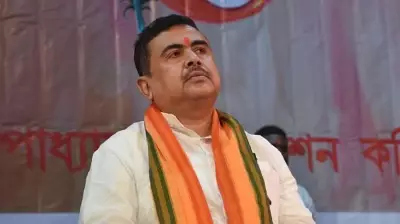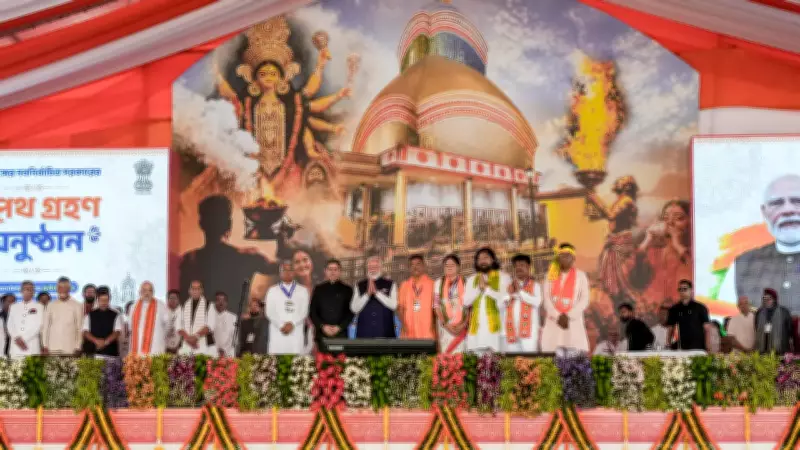
NEW DELHI: As Suvendu Adhikari took oath as West Bengal's first BJP chief minister on Rabindranath Tagore Jayanti following a landslide mandate for the saffron party, the moment marked more than an electoral victory. In Bengal's political memory, power shifts have often been shaped by short-lived political waves. The 2026 assembly outcome, however, reflected decades of groundwork by RSS and the gradual expansion of its social and organisational networks that helped reshape the state's political landscape and power BJP's electoral breakthrough.
Sangh's Long Presence in Bengal
Sangh's presence in Bengal long predates its electoral relevance. After Partition, it engaged in relief work among Hindu refugees from East Pakistan, particularly in border districts. This outreach embedded the organisation within local society through networks rooted in identity, displacement and community associations — spaces that later acquired political significance.
The ideological foundation of this network can be traced to Syama Prasad Mookerjee, founder of Bharatiya Jana Sangh in 1951. His role during Partition events and death in 1953 allowed Sangh ecosystem to project him both as a Bengali icon and a national figure, lending continuity and local legitimacy to what later evolved into BJP's Bengal strategy.

For decades, however, Sangh's influence remained largely social. The dominance of CPI(M)-led Left Front between 1977 and 2011 shaped a political culture centred on class mobilisation, leaving little room for identity-driven politics. BJP's vote share remained marginal until quite recently — 4.06% in 2011 and 10.16% in 2016 — underscoring the gap between organisational presence and electoral outcomes.
The Shift After Left's Decline
The shift began after Left's decline. As Trinamool Congress consolidated power after 2011, it also inherited a fragmented opposition space. This created room for Sangh's long-built networks to move into electoral politics. By 2021, BJP had emerged as the principal opposition party with over 38% vote share, marking the first major conversion of organisational depth into electoral strength.
Much of this transformation, however, unfolded away from public attention. RSS organisers quietly worked across districts — from north Bengal to the western industrial belt — reconnecting with disaffected cadres, identifying local influencers and building booth-level linkages. This patient, years-long outreach gradually converted scattered support into a cohesive political force.
2026 Election: Consolidation of the Shift
The 2026 election marked a further consolidation of this shift. BJP's vote share rose to around 45.8%, while Trinamool's declined to about 40.8%, signalling that Sangh-backed ecosystem had matured into a decisive political force.
At organisational level, RSS expanded its shakhas and local activities, strengthening booth-level mobilisation and sustaining engagement beyond elections. Simultaneously, the ecosystem localised its appeal through Bengali language, cultural symbols and regional references, reducing perceptions of being an external force.
The campaign led by Prime Minister Narendra Modi and Home Minister Amit Shah built on these foundations. While identity-linked themes such as citizenship and border concerns remained central, the 2026 campaign also foregrounded governance issues, including jobs, corruption, welfare delivery and women's safety. Outreach to communities such as Matuas, alongside concerns around unemployment and governance, helped BJP expand beyond its traditional base among youth and women.