The Majestic Rwenzori Mountains: Africa's Towering Natural Wonder
The Rwenzori Mountains stand as one of Africa's most spectacular geological formations, soaring to elevations exceeding 5,000 meters (approximately 16,000 feet) above sea level. On clear days, these magnificent peaks are visible for miles across the landscape, with some reports suggesting they can even be seen from orbital vantage points when weather conditions permit.
A Rare Cloud-Free Satellite View
NASA's Landsat 9 satellite captured an exceptionally clear view of the Rwenzori range on March 13, 2024, providing one of the most detailed natural-color images of the region in recent years. This remarkable photograph reveals the mountains straddling the border between Uganda and the Democratic Republic of Congo, positioned along the western branch of the East African Rift system.
Unlike their volcanic counterparts Kilimanjaro and Mount Kenya, the Rwenzori Mountains formed through tectonic forces that continue to pull the African continent apart. This geological activity causes some land blocks to sink while others, including the Rwenzori massif, rise dramatically upward.

Protected Status and Unique Biodiversity
Recognizing their ecological significance, Uganda designated the Rwenzori Mountains as a national park in 1991, with UNESCO following suit by declaring the area a World Heritage Site in 1994. This protected status helps conserve one of Africa's most remarkable ecosystems.
Extraordinary Flora and Fauna
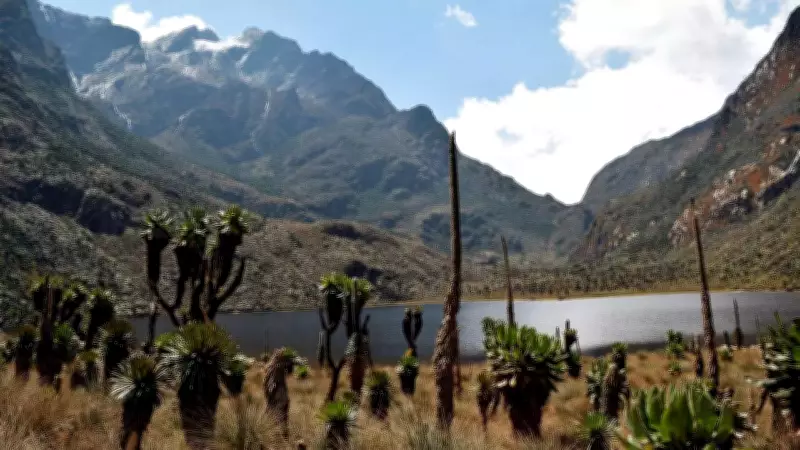
The mountains host vegetation found nowhere else on Earth, including giant lobelias and groundsels that create an almost surreal landscape. These unique plants thrive alongside diverse animal populations:
- African forest elephants roaming the lower slopes
- Eastern chimpanzees swinging through the forest canopy
- Rwenzori duikers darting through the undergrowth
Hydrological Importance and Historical Significance
The Rwenzori range serves as a crucial water source for the region, with streams feeding major rivers including the Semliki and Nyamwamba that eventually flow into Lake Albert and Lake George. This hydrological significance was recognized as early as the 2nd century when astronomer Ptolemy referred to the mountains as the "Mountains of the Moon" and theorized they fed the Nile River.
While modern hydrology reveals a more complex relationship with the Nile system, the Rwenzori Mountains remain vital to regional water security, supporting millions of people downstream through their river networks.
The Disappearing Glaciers
Rapid Ice Loss Documented
The three highest peaks of the Rwenzori range—Mount Stanley, Mount Speke, and Mount Baker—are traditionally capped with snow and glacial ice. However, recent research reveals alarming trends:
- Between 2020 and 2024, the Stanley Plateau glacier shrank by nearly 30%
- Mount Speke reportedly no longer supports a glacier at all
- Remaining glaciers show significant thinning and reduced coverage
These tropical glaciers exist not because of latitude but elevation, with cold temperatures at high altitudes allowing ice to persist even near the equator. Unfortunately, warming temperatures are now overwhelming this elevation advantage.
A Global Pattern of Glacial Retreat
The Rwenzori's shrinking glaciers reflect a broader pattern across tropical mountain regions:
- Kilimanjaro's ice fields have retreated dramatically
- Mount Kenya shows similar glacial decline
- Puncak Jaya in Indonesia faces comparable ice loss
- Sierra Nevada de Mérida in Venezuela experiences glacier shrinkage
While ice persists in these locations, it exists in increasingly fragile, delicate states that appear increasingly vulnerable to climate pressures.
Ecological and Human Implications
The white glacial caps create breathtaking scenery from a distance, but up close, scientists observe shrinking areas and thinning ice that signal profound environmental changes. These transformations serve as a powerful reminder that even the most rugged, towering peaks are not immune to climate change impacts.

The Rwenzori Mountains represent far more than scenic beauty—they constitute ecological, cultural, and hydrological treasures of global significance. The unique plants and animals found here exist nowhere else on Earth, while the rivers and streams originating in these mountains support millions of people throughout the region.
Experts warn that retreating glaciers could significantly affect water flow patterns, with local communities likely to feel these impacts first and most severely. The mountains' changing hydrology represents both an environmental concern and a potential threat to regional water security.
A Living Geological and Historical Record
Observing the Rwenzori Mountains offers a glimpse into geological history, ecological diversity, and human cultural heritage all within a single landscape. From Ptolemy's ancient theories to modern scientific research, these mountains have captured human imagination for centuries.
Despite mounting climate pressures, the Rwenzori range continues to dominate its landscape with awe-inspiring presence. Their story encompasses natural wonder, scientific discovery, and environmental urgency—a complex narrative written across rock, ice, and forest that continues to unfold with each passing year.