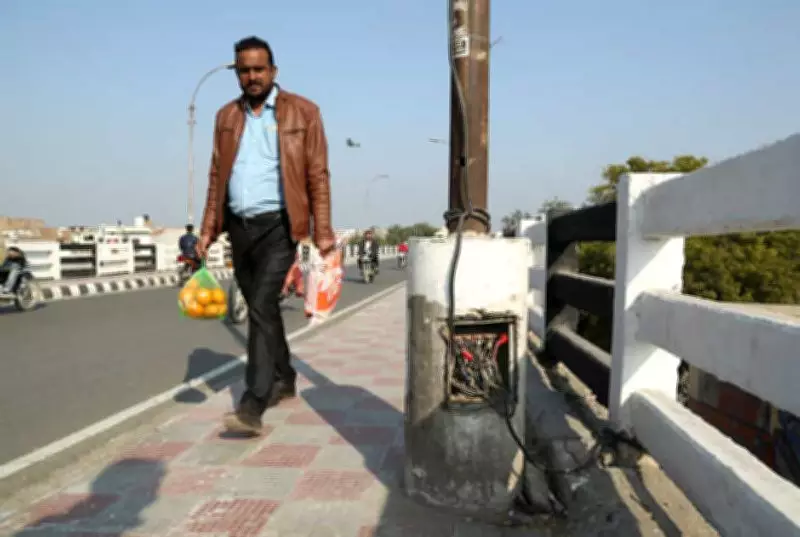
Supreme Court Declares Pedestrian Right as Fundamental
The Supreme Court of India has declared that the right to walk on a safe, demarcated footpath is a fundamental right, reminding cities that roads are for people, not just vehicles. By linking pedestrian rights to constitutional guarantees of life, liberty, and freedom of movement, the court has elevated civic necessity into public accountability.
Pedestrian Infrastructure Crisis in Indian Cities
For millions of Indians, walking is a daily necessity. Children going to school, elderly citizens visiting markets, workers commuting short distances, and persons with disabilities all depend on safe pedestrian infrastructure. However, footpaths are routinely encroached upon by vendors, parked vehicles, and construction debris. Pedestrians are often forced onto busy roads, exposing them to serious risks.
Vehicle-Centric Urban Planning Blamed
The court's observation that motorists cannot override pedestrian rights strikes at the heart of vehicle-centric urban planning. For decades, road projects have prioritized traffic flow while treating footpaths as an afterthought. The consequences are visible in rising fatalities and shrinking public spaces. According to the Ministry of Road Transport and Highways' 2024 report, 36,526 pedestrians were killed in road crashes, accounting for 20.6% of all road deaths.

Call for Dedicated Legal Framework
The court also called for a dedicated legal framework to protect pedestrian rights. Existing laws are fragmented and poorly enforced. A comprehensive law could establish standards for footpath design, accessibility, maintenance, and accountability. Municipal authorities must enforce anti-encroachment rules, improve urban design, and invest in accessible infrastructure.
Vision for Modern Cities
A city becomes truly modern not when it accommodates more cars, but when it allows every citizen to walk safely and with dignity. The Supreme Court has shown the way; governments must now follow.